 ChipApex | Global Electronic Components Supplier
SEARCH
Search Product
Search Post
— IC芯片 | 连接器 | 传感器 | 被动器件 —
Search productSearch post
— IC芯片 | 连接器 | 传感器 | 被动器件 —
Consult the customer manager about the wholesale price.
consultation hotline:86-132-6715-2157
email:[email protected]
Contact the product manager for consultation. One-stop consultation is available.
Do you want a lower wholesale price? Please send us your inquiry and we will reply immediately.
The AMD XCZU7CG-2FFVF1517E is a Zynq UltraScale+ MPSoC System-on-Chip featuring an FCBGA-1517 package. It integrates a quad-core ARM Cortex-A53 application processor running up to 1.5 GHz and a dual-core ARM Cortex-R5 real-time processor operating at 600 MHz. The programmable logic section provides 28,800 Adaptive Logic Modules (ALMs) or 504,000 Look-Up Tables. Key resources include 11 Mbit of embedded block RAM, 6.2 Mbit of distributed RAM, and 24 high-speed transceivers. The device supports 488 I/O pins and operates within a junction temperature range of 0°C to +100°C with a core voltage of 850 mV.
Verify the specific suffix codes against official AMD documentation to confirm performance grade and industrial temperature rating. Ensure compatibility with required power delivery networks for the 850 mV core voltage. Confirm lead times and availability through authorized distributors as supply levels fluctuate. Validate that the FCBGA-1517 footprint matches the target PCB design constraints.
Select this model when requiring a balance between processing power and logic capacity without the enhanced graphics unit found in EG variants. Compare against the XCZU7EG series if GPU acceleration is necessary. Consider the XCZU5CG or XCZU9CG models if resource requirements differ significantly. Verify that the 488 I/O count meets interface requirements before finalizing the part number.
This component belongs to the Zynq UltraScale+ MPSoC family, which merges ARM processor subsystems with Xilinx FPGA fabric on a single die. The CG designation typically indicates a specific configuration within the standard MPSoC lineup, distinct from the Enhanced Graphics (EG) or RFSoC variants. It utilizes TSMC's 16nm FinFET+ process technology for improved power efficiency compared to previous generations.
Direct pin-to-pin replacements within the same package are limited to other XCZU7CG variants with different speed grades or temperature ratings. Cross-family migration to XCZU5CG or XCZU9CG requires schematic and firmware redesign due to differing resource counts and pin assignments.
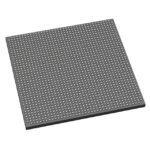 XCZU7CG-2FFVF1517E
The activity of extra discounts on wholesale prices is in full swing…
Please fill in your contact information and we will send you the latest wholesale price list.




