 ChipApex | Global Electronic Components Supplier
SEARCH
Search Product
Search Post
— IC芯片 | 连接器 | 传感器 | 被动器件 —
Search productSearch post
— IC芯片 | 连接器 | 传感器 | 被动器件 —
Consult the customer manager about the wholesale price.
consultation hotline:86-132-6715-2157
email:[email protected]
Contact the product manager for consultation. One-stop consultation is available.
Do you want a lower wholesale price? Please send us your inquiry and we will reply immediately.
The XR17D158CV is an octal Universal Asynchronous Receiver and Transmitter (UART) designed for PCI bus applications. It integrates eight independent UART channels within a single integrated circuit, providing serial communication capabilities for systems requiring multiple asynchronous interfaces. The device features 64-byte transmit and receive FIFOs per channel to enhance data throughput and reduce processor overhead. It supports universal PCI bus signaling with auto-sense capability for both 3.3V and 5V operation, ensuring compatibility with various PCI standards. The component operates within a commercial temperature range of 0°C to +70°C and utilizes a 144-lead LQFP package.
Verify the specific suffix and revision code against official MaxLinear documentation to ensure correct pinout and electrical characteristics. Confirm end-of-life status and availability through authorized distributors, as this component may be discontinued or subject to limited supply constraints. Request full datasheets and errata sheets prior to procurement to validate design-in parameters.
Select this component when designing PCI-based systems requiring eight independent serial ports in a single package. Ensure the target system supports the required PCI bus signaling voltages and that the 144-lead LQFP footprint matches the PCB layout. Verify thermal management requirements for the commercial temperature range and confirm that the FIFO depth meets the application's burst data handling needs.
The XR17D158CV belongs to the XR17D15x series of PCI UARTs from MaxLinear. It shares pin compatibility with other members of the family, such as the quad-channel XR17D154, allowing for flexible design scaling. This series is engineered to provide robust serial connectivity solutions for legacy and modern PCI architectures, bridging parallel bus systems with asynchronous serial peripherals.
Check for direct replacements like the XR17D158IV-F for extended temperature ranges. Evaluate the XR17V358IB176-F for PCIe-based designs requiring higher performance and larger FIFOs. Verify pin-to-pin compatibility and register-level equivalence before substituting any alternative components.
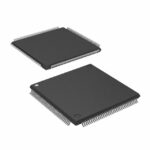 XR17D158CV
The activity of extra discounts on wholesale prices is in full swing…
Please fill in your contact information and we will send you the latest wholesale price list.





