 ChipApex | Global Electronic Components Supplier
SEARCH
Search Product
Search Post
— IC芯片 | 连接器 | 传感器 | 被动器件 —
Search productSearch post
— IC芯片 | 连接器 | 传感器 | 被动器件 —
Consult the customer manager about the wholesale price.
consultation hotline:86-132-6715-2157
email:[email protected]
Contact the product manager for consultation. One-stop consultation is available.
Do you want a lower wholesale price? Please send us your inquiry and we will reply immediately.
The ZHB6792TA is a bipolar junction transistor (BJT) array manufactured by Diodes Incorporated, featuring two NPN and two PNP transistors configured as an H-bridge. It operates with a maximum collector-emitter voltage of 70V for both NPN and PNP elements and supports a continuous collector current of 1A. The device utilizes an SM-8 surface-mount package and provides a total power dissipation rating of 1.25W at 25°C ambient temperature. Electrical characteristics include a transition frequency of up to 150MHz for NPNs and 100MHz for PNPs, with saturation voltages specified under pulsed test conditions.
Verify the component status before procurement as the datasheet explicitly states the ZHB6792 is not recommended for new designs. Confirm that the ordering suffix TA corresponds to the correct packaging format required for your assembly process. Ensure compliance with RoHS3 standards and check for any recent Product Change Notices regarding manufacturing sources or material updates prior to finalizing orders.
Select this component only if the application can accommodate the manufacturer's recommendation against using it in new designs. Evaluate thermal performance carefully, as power dissipation capabilities depend heavily on PCB copper area and mounting conditions. Verify that the SM-8 package dimensions and pinout align with the target footprint, and ensure the 70V voltage rating meets the system's peak operational requirements.
The ZHB6792TA belongs to the ZHB6792 series of dual complementary transistor arrays produced by Diodes Incorporated. This series is designed to provide a compact solution for H-bridge applications, integrating both NPN and PNP devices into a single SM-8 package. The 'TA' suffix typically denotes the specific tape and reel packaging variant used for automated surface-mount assembly processes.
Publicly confirmed substitute part numbers are not available in the provided documentation. As the datasheet indicates the device is not recommended for new designs, alternative components should be evaluated based on matching H-bridge topology, voltage/current ratings, and package compatibility.
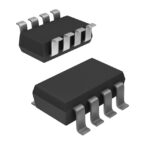 ZHB6792TA
The activity of extra discounts on wholesale prices is in full swing…
Please fill in your contact information and we will send you the latest wholesale price list.






