 ChipApex | Global Electronic Components Supplier
SEARCH
Search Product
Search Post
— IC芯片 | 连接器 | 传感器 | 被动器件 —
Search productSearch post
— IC芯片 | 连接器 | 传感器 | 被动器件 —
Consult the customer manager about the wholesale price.
consultation hotline:86-132-6715-2157
email:[email protected]
Contact the product manager for consultation. One-stop consultation is available.
Do you want a lower wholesale price? Please send us your inquiry and we will reply immediately.
The ZMV830BTC is a silicon hyperabrupt varactor diode from the 830 series, manufactured by Diodes Incorporated (formerly Zetex Semiconductors). It is housed in an SOT-23 surface-mount package. The device features closely controlled capacitance-voltage characteristics and high Q factors for frequency control applications. Key electrical parameters include a nominal capacitance of 10.0 pF at 2V reverse bias and 1MHz frequency, with a minimum Q of 300 at 3V and 50MHz. The capacitance ratio (C2/C20) ranges from 4.5 to 6.0. It operates within a temperature range of -55°C to +150°C.
Verify component authenticity through authorized channels as the manufacturer reserves the right to alter specifications without notice. Confirm the specific suffix 'BTC' corresponds to the SOT-23 tape and reel packaging format. Ensure compliance with RoHS directives and check for any product change notifications regarding the 830 series before finalizing procurement plans.
Select this component when a single-ended hyperabrupt varactor with a nominal capacitance near 10pF is required. The SOT-23 package suits space-constrained designs. Compare against the ZMV830BTA variant if different reel sizes are needed, noting that suffix changes may indicate packaging differences rather than functional variations. Evaluate thermal dissipation limits relative to the application environment.
This part belongs to the 830 series of silicon hyperabrupt varactor diodes originally developed by Zetex Semiconductors plc. The series includes various capacitance values and package types such as SOD-323 and SOD-523. Diodes Incorporated acquired Zetex, and the product line continues under their portfolio. The ZMV830BTC specifically denotes the single-ended version in the SOT-23 footprint.
The ZMV830BTA is a similar part number within the same series, potentially differing only in reel size or packaging configuration. Other series members like ZMV829 or ZMV831 offer different nominal capacitances but share similar electrical profiles. Verify pinout compatibility and capacitance tolerances when substituting.
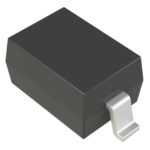 ZMV830BTC
The activity of extra discounts on wholesale prices is in full swing…
Please fill in your contact information and we will send you the latest wholesale price list.





