 ChipApex | Global Electronic Components Supplier
SEARCH
Search Product
Search Post
— IC芯片 | 连接器 | 传感器 | 被动器件 —
Search productSearch post
— IC芯片 | 连接器 | 传感器 | 被动器件 —
Consult the customer manager about the wholesale price.
consultation hotline:86-132-6715-2157
email:[email protected]
Contact the product manager for consultation. One-stop consultation is available.
Do you want a lower wholesale price? Please send us your inquiry and we will reply immediately.
The ZMV834ATC is a silicon hyperabrupt varactor diode from the 830 series, designed for frequency control and filtering applications. It features closely controlled capacitance-voltage characteristics and high Q factors. The device operates with a nominal capacitance of 47 pF at 2V reverse bias (1MHz), with a minimum Q of 200 at 3V (50MHz). Reverse leakage current is typically 200pA, ensuring low phase noise performance. The component supports an operating temperature range of -55°C to +150°C and is available in surface mount packages.
Verify the ordering suffix 'TC' indicates 13-inch tape and reel packaging containing 10,000 units per reel, distinct from the 'TA' suffix which denotes 7-inch reels. Confirm the specific package type matches design requirements, as the 830 series includes SOT23, SOD323, SOD523, and SOT323 options. Ensure compliance with RoHS directives and check for authorized distributor channels to guarantee product authenticity.
Select this part when steep capacitance-voltage slopes are required for wide tuning ranges. Compare against the 12V hyperabrupt range if lower voltage operation is necessary. Verify that the nominal 47pF capacitance fits the target circuit's resonant frequency requirements. Check thermal dissipation limits relative to the chosen package style, noting that SOD523 has a lower power dissipation rating than SOT23 or SOD323 variants.
This component belongs to the Zetex 830 series of silicon hyperabrupt varactor diodes. The series includes various models such as ZC829, ZMV829, and ZV831, offering different capacitance values and package formats. The ZMV834ATC specifically represents the 834 variant within this family, characterized by its 47pF nominal capacitance and availability in surface mount configurations for compact electronic designs.
Public confirmed substitute part numbers include ZMV834ATA (7-inch reel version) and ZMV834BTA (alternative marking/version). Other series members like ZMV833 or ZMV835 may serve as alternatives if capacitance differences are acceptable.
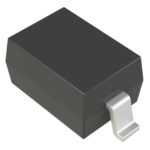 ZMV834ATC
The activity of extra discounts on wholesale prices is in full swing…
Please fill in your contact information and we will send you the latest wholesale price list.





