 ChipApex | Global Electronic Components Supplier
SEARCH
Search Product
Search Post
— IC芯片 | 连接器 | 传感器 | 被动器件 —
Search productSearch post
— IC芯片 | 连接器 | 传感器 | 被动器件 —
Consult the customer manager about the wholesale price.
consultation hotline:86-132-6715-2157
email:[email protected]
Contact the product manager for consultation. One-stop consultation is available.
Do you want a lower wholesale price? Please send us your inquiry and we will reply immediately.
The Microchip Technology 1N6843CCU3 is a silicon Schottky rectifier designed for surface-mount applications. It features a dual configuration within an SMD-3 package. The device supports a maximum average forward current of 15 A and withstands a repetitive peak reverse voltage of 100 V. Key electrical characteristics include a maximum forward voltage of 1.03 V, a surge forward current rating of 100 A, and a low reverse current of 10 uA. The component operates reliably across a temperature range from -65°C to +150°C.
Verify the specific suffix (e.g., TR) when ordering, as it indicates tape-and-reel packaging which differs from bulk or tray formats. Confirm RoHS compliance status directly with the manufacturer, as historical data may vary by production batch. Ensure the selected variant matches the required lead time constraints, as military-grade or specialized variants often have extended manufacturing cycles compared to standard commercial components.
Select this component when a dual-diode arrangement is required in a minimal footprint. The 100 V rating suits low-voltage DC systems, while the 15 A current capacity handles moderate loads. Verify that the SMD-3 package aligns with the PCB layout constraints. Consider the 150°C junction temperature limit for high-temperature operational environments where standard silicon devices might fail.
This part belongs to Microchip's discrete semiconductor portfolio, specifically within the Schottky diode category. It utilizes silicon technology to provide fast switching capabilities and low conduction losses. The product line is engineered for reliability in industrial and commercial power management applications, offering a robust alternative to standard PN-junction rectifiers in low-voltage, high-current scenarios.
Cross-reference with other dual Schottky diodes in SMD-3 packages from Microchip or competitors. Ensure substitute parts match the 100 V reverse voltage and 15 A forward current ratings. Verify pinout compatibility and thermal resistance specifications to maintain system performance without redesigning the heat dissipation strategy.
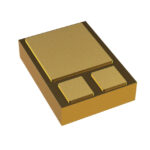 1N6843CCU3
The activity of extra discounts on wholesale prices is in full swing…
Please fill in your contact information and we will send you the latest wholesale price list.





