 ChipApex | Global Electronic Components Supplier
SEARCH
Search Product
Search Post
— IC芯片 | 连接器 | 传感器 | 被动器件 —
Search productSearch post
— IC芯片 | 连接器 | 传感器 | 被动器件 —
Consult the customer manager about the wholesale price.
consultation hotline:86-132-6715-2157
email:[email protected]
Contact the product manager for consultation. One-stop consultation is available.
Do you want a lower wholesale price? Please send us your inquiry and we will reply immediately.
The onsemi 2N5061G is a silicon-controlled rectifier (SCR) designed for general-purpose switching applications. It utilizes a TO-92 through-hole package, providing a compact form factor for low-power control circuits. The device features a three-terminal structure with an anode, cathode, and gate for triggering. Key electrical characteristics include a maximum repetitive peak reverse voltage of 400 V and a holding current specification typical for this class of thyristor. The component operates within a junction temperature range of -40 °C to +110 °C, ensuring reliability in standard industrial environments.
Verify the specific suffix 'G' against the manufacturer's latest documentation to confirm lead-free compliance status. Confirm availability as the component may be subject to lifecycle changes or obsolescence notices. Ensure the ordering quantity aligns with the manufacturer's standard packaging requirements. Cross-reference the datasheet revision date to validate all electrical parameters before finalizing procurement specifications.
Select the 2N5061G when a low-current SCR is required for simple trigger applications. Compare the 400 V rating against the peak line voltage to ensure adequate safety margins. Evaluate the thermal management requirements based on the TO-92 package's power dissipation limits. Consider alternative packages if higher current capacity or surface-mount compatibility is necessary for the target design.
The 2N5061G belongs to the standard NPN-style SCR family historically defined by JEDEC numbering. This specific part number represents the onsemi manufacturing variant of the classic 2N5061 device. It serves as a direct replacement for legacy designs requiring a small-signal thyristor. The component is widely recognized in educational and industrial prototyping contexts for basic phase-control experiments.
Direct equivalents include the STMicroelectronics BCR1AM or similar generic 2N5061 variants from other manufacturers. Verify pinout compatibility and exact voltage ratings when substituting. Check for any differences in gate trigger current specifications that might affect circuit performance.
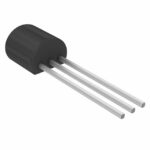 2N5061G
The activity of extra discounts on wholesale prices is in full swing…
Please fill in your contact information and we will send you the latest wholesale price list.





