 ChipApex | Global Electronic Components Supplier
SEARCH
Search Product
Search Post
— IC芯片 | 连接器 | 传感器 | 被动器件 —
Search productSearch post
— IC芯片 | 连接器 | 传感器 | 被动器件 —
Consult the customer manager about the wholesale price.
consultation hotline:86-132-6715-2157
email:[email protected]
Contact the product manager for consultation. One-stop consultation is available.
Do you want a lower wholesale price? Please send us your inquiry and we will reply immediately.
The Microchip Technology 2N5237 is a silicon NPN power bipolar junction transistor (BJT) designed for through-hole mounting in the TO-5AA metal can package. It features a maximum DC collector current of 10 A and a collector-emitter breakdown voltage (VCEO) of 120 V. The device supports a collector-base voltage (VCBO) of 150 V and an emitter-base voltage (VEBO) of 10 V. With a power dissipation rating of 1 W, it operates within a temperature range of -65°C to +200°C. The collector-emitter saturation voltage is specified at 600 mV.
Verify component authenticity by checking the manufacturer's marking code against official datasheet specifications. Confirm the package type matches the required TO-5AA footprint. Ensure the specific lot number complies with project quality standards. Cross-reference the RoHS status if environmental compliance is mandatory for the final assembly. Validate electrical parameters against the latest Microchip Technology data sheet before integration.
Select this component when high collector current and wide temperature operation are critical. The TO-5AA package provides superior thermal performance compared to plastic alternatives. Consider the 1 W power dissipation limit during circuit design. Evaluate the 120 V breakdown voltage against peak transient loads. Ensure the driving circuit can supply sufficient base current to maintain saturation at 10 A.
The 2N5237 belongs to the legacy military-grade BJT family produced by Microchip Technology. It shares functional similarities with other high-power NPN transistors in the TO-5AA series. This component is often used in replacement scenarios for older industrial equipment. Its specification aligns with standard MIL-SPEC requirements for ruggedness. The part remains relevant for maintaining existing high-reliability hardware systems.
Consult official Microchip documentation for direct cross-reference part numbers. Verify pinout compatibility with the original TO-5AA socket. Ensure thermal resistance characteristics match the heat sink design. Check that voltage ratings exceed the original circuit requirements.
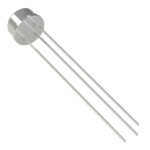 2N5237
The activity of extra discounts on wholesale prices is in full swing…
Please fill in your contact information and we will send you the latest wholesale price list.





