 ChipApex | Global Electronic Components Supplier

SEARCH
Search Product
Search Post
— IC芯片 | 连接器 | 传感器 | 被动器件 —
Search productSearch post
— IC芯片 | 连接器 | 传感器 | 被动器件 —
Consult the customer manager about the wholesale price.
consultation hotline:86-132-6715-2157
email:[email protected]
Contact the product manager for consultation. One-stop consultation is available.
Do you want a lower wholesale price? Please send us your inquiry and we will reply immediately.
The Central Semiconductor Corp 2N5400 PBFREE is a silicon PNP epitaxial planar transistor designed for high voltage amplifier applications. It features a collector-base voltage of 130V and a collector-emitter voltage of 120V, with an emitter-base voltage rating of 5.0V. The device supports a maximum DC collector current of 600mA and dissipates up to 625mW of power. It offers a gain bandwidth product of 400MHz and operates within a temperature range of -65°C to +150°C. Packaged in a TO-92-3 through-hole configuration, it ensures reliable performance in demanding electronic circuits.
Verify the specific datasheet version for the 2N5400 PBFREE, as some sources cite 120V or 130V collector-base voltages. Confirm the TO-92-3 package type matches your PCB footprint requirements. Ensure the lead-free (PBFREE) designation aligns with your assembly process standards. Cross-reference the manufacturer's official documentation for precise thermal resistance values and absolute maximum ratings before finalizing the design.
Select this component when a PNP transistor with high voltage handling is required for amplifier stages. The 600mA current capacity suits moderate load applications. Compare against the 2N5401 if higher collector-base voltage (160V) is needed. Consider the 400MHz bandwidth for frequency-sensitive designs. Ensure the through-hole mounting style fits the manufacturing constraints.
This part belongs to the Central Semiconductor 2N5400 series of silicon PNP transistors. It is functionally similar to the 2N5401 but typically rated for slightly lower collector-base voltages. The series is designed for general-purpose and high-voltage amplifier uses. The PBFREE suffix indicates compliance with lead-free manufacturing standards.
The 2N5401 is a direct functional substitute offering higher collector-base voltage (160V vs 130V). Verify that the replacement's voltage ratings exceed the original circuit requirements. Other generic PNP transistors may require re-evaluation of biasing networks due to varying hFE and saturation voltage characteristics.
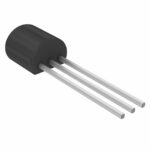 2N5400 PBFREE

The activity of extra discounts on wholesale prices is in full swing…
Please fill in your contact information and we will send you the latest wholesale price list.





