 ChipApex | Global Electronic Components Supplier

SEARCH
Search Product
Search Post
— IC芯片 | 连接器 | 传感器 | 被动器件 —
Search productSearch post
— IC芯片 | 连接器 | 传感器 | 被动器件 —
Consult the customer manager about the wholesale price.
consultation hotline:86-132-6715-2157
email:[email protected]
Contact the product manager for consultation. One-stop consultation is available.
Do you want a lower wholesale price? Please send us your inquiry and we will reply immediately.
The Central Semiconductor Corp 2N5785 is an NPN small signal amplifier and switch transistor housed in a TO-39 metal can package. It features a collector-base voltage of 65 V, a collector-emitter voltage of 50 V, and an emitter-base voltage of 5.0 V. The device supports a maximum collector current of 100 mA with a minimum DC current gain (hFE) of 60 at 20 mA. Key electrical characteristics include a transition frequency of 1200 MHz, a collector capacitance of 1.0 pF, and saturation voltages of 2.0 V at 1 A and 0.75 V at 100 mA.
Verify the specific plating configuration required for your assembly process, as options include Tin/Lead or Lead-Free finishes. Confirm availability status carefully, as this component has been subject to End-of-Life notices and may be available only through existing stock. Contact the manufacturer directly for current inventory levels and last-time buy information before finalizing procurement plans.
Select this component when a hermetically sealed NPN transistor with a 50 V collector-emitter rating and high-speed switching capability is required. Ensure the application circuit operates within the specified 100 mA continuous collector current limit. Verify that the TO-39 package dimensions are compatible with the target PCB or chassis mounting requirements.
This part belongs to the Central Semiconductor small signal transistor family, specifically optimized for general-purpose amplification and switching tasks. It shares the TO-39 form factor with other discrete transistors in the portfolio but offers distinct voltage and frequency parameters tailored for mid-range RF applications.
Official documentation lists no direct replacement part numbers for the 2N5785. Customers are advised to submit technical inquiries to the manufacturer's engineering team for assistance in locating alternate sources or equivalent components.
The maximum collector-emitter voltage (VCEO) is 50 V.
No official replacement part number is provided by the manufacturer; alternative sourcing requires direct engineering consultation.
The transition frequency (fT) is specified at 1200 MHz under standard test conditions.
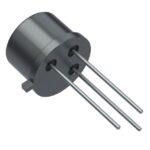 2N5785

The activity of extra discounts on wholesale prices is in full swing…
Please fill in your contact information and we will send you the latest wholesale price list.





