 ChipApex | Global Electronic Components Supplier

SEARCH
Search Product
Search Post
— IC芯片 | 连接器 | 传感器 | 被动器件 —
Search productSearch post
— IC芯片 | 连接器 | 传感器 | 被动器件 —
Consult the customer manager about the wholesale price.
consultation hotline:86-132-6715-2157
email:[email protected]
Contact the product manager for consultation. One-stop consultation is available.
Do you want a lower wholesale price? Please send us your inquiry and we will reply immediately.
The 2N6497 is a high voltage NPN silicon power transistor manufactured by onsemi. It features a collector-emitter voltage (VCEO) of 250 V and a collector-base voltage (VCBO) of 350 V. The device supports a continuous collector current of 5 A with a maximum power dissipation of 80 W at case temperature of 25°C. Key electrical characteristics include a gain bandwidth product (fT) of 5 MHz, an emitter-base voltage (VEBO) of 6 V, and a collector-emitter saturation voltage of 1 V. The thermal resistance from junction to case is 1.56 °C/W.
Verify component authenticity through authorized onsemi distributors or certified suppliers. Confirm the part number matches the specific datasheet requirements for voltage and current ratings. Check for obsolescence status as the lifecycle may be marked obsolete in some regions. Ensure proper handling procedures are followed due to the power transistor nature of the device.
Select this component when designing circuits requiring a 250 V NPN power transistor with 5 A current capacity. Consider the 80 W power dissipation limit and the need for adequate heat sinking given the 1.56 °C/W thermal resistance. Evaluate the 5 MHz gain bandwidth product against the required signal frequency. Compare against alternatives if higher voltage ratings such as 300 V or 350 V are needed, which correspond to the 2N6498 and 2N6499 variants respectively.
The 2N6497 belongs to a family of high voltage NPN silicon power transistors produced by onsemi and other manufacturers like Central Semiconductor. It is often grouped with similar devices such as the 2N6498 and 2N6499, which offer progressively higher voltage ratings of 300 V and 350 V respectively. These transistors are standardized for use in demanding power electronics environments where reliable high-voltage operation is critical.
Public confirmed substitute part numbers include 2N6498 and 2N6499 from Central Semiconductor Corp., which share similar packaging and pinouts but offer higher voltage ratings of 300 V and 350 V respectively. Verify that the increased voltage ratings do not conflict with circuit design constraints.
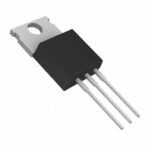 2N6497

The activity of extra discounts on wholesale prices is in full swing…
Please fill in your contact information and we will send you the latest wholesale price list.





