 ChipApex | Global Electronic Components Supplier

SEARCH
Search Product
Search Post
— IC芯片 | 连接器 | 传感器 | 被动器件 —
Search productSearch post
— IC芯片 | 连接器 | 传感器 | 被动器件 —
Consult the customer manager about the wholesale price.
consultation hotline:86-132-6715-2157
email:[email protected]
Contact the product manager for consultation. One-stop consultation is available.
Do you want a lower wholesale price? Please send us your inquiry and we will reply immediately.
2SA1837,F(J is listed in the Single Bipolar Transistors range at ChipApex. The manufacturer field lists Toshiba Semiconductor and Storage. Its product description is TRANS PNP 230V 1A TO-220NIS. Review the specifications below when checking this part for your BOM.
The Toshiba Semiconductor and Storage 2SA1837 is a PNP silicon epitaxial transistor designed for power amplifier applications. It features a high transition frequency of 70 MHz typical, making it suitable for driver stage amplification. The device provides a collector-emitter breakdown voltage of -230 V and supports a maximum collector current of -1 A. Electrical characteristics include a minimum DC current gain (hFE) of 100 at -100 mA and a maximum collector-emitter saturation voltage of -1.5 V under specified conditions.
Verify RoHS compliance status directly with the manufacturer or authorized distributors, as legacy variants may differ from lead-free specifications. Confirm package marking details to distinguish between standard and Pb-free finishes. Review the Toshiba Semiconductor Reliability Handbook for derating concepts and methods before finalizing designs. Ensure component sourcing aligns with current production lifecycle statuses.
Select this component when designing PNP stages requiring high-speed switching capabilities within power amplifier topologies. Consider its complementary relationship with the 2SC4793 for balanced push-pull configurations. Evaluate thermal management requirements carefully, as power dissipation ratings are strictly dependent on case temperature conditions during operation.
This component belongs to the family of Toshiba silicon epitaxial transistors engineered for discrete semiconductor applications. It utilizes a specific manufacturing process to achieve high transition frequencies while maintaining robust voltage handling capabilities. The device is housed in a through-hole package designed for efficient heat dissipation in power electronics environments.
The datasheet explicitly identifies the 2SC4793 as the complementary NPN counterpart. Verify pinout compatibility and electrical symmetry if substituting components in existing circuit designs.
Explore related parts through Bipolar (BJT), Transistors, Discrete Semiconductor Products, all product categories.
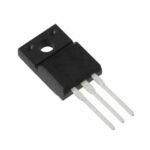 2SA1837,F(J

The activity of extra discounts on wholesale prices is in full swing…
Please fill in your contact information and we will send you the latest wholesale price list.





