 ChipApex | Global Electronic Components Supplier

SEARCH
Search Product
Search Post
— IC芯片 | 连接器 | 传感器 | 被动器件 —
Search productSearch post
— IC芯片 | 连接器 | 传感器 | 被动器件 —
Consult the customer manager about the wholesale price.
consultation hotline:86-132-6715-2157
email:[email protected]
Contact the product manager for consultation. One-stop consultation is available.
Do you want a lower wholesale price? Please send us your inquiry and we will reply immediately.
2SAR554PT100 is listed in the Single Bipolar Transistors range at ChipApex. The manufacturer field lists Rohm Semiconductor. Its product description is TRANS PNP 80V 1.5A MPT3. Review the specifications below when checking this part for your BOM.
The 2SAR554PT100 is a PNP bipolar junction transistor manufactured by ROHM Semiconductor, designed for driver applications. It features a collector-emitter voltage of -80 V and a continuous collector current of -1.5 A. The device operates in the MPT3 surface-mount package with a power dissipation rating of 2 W. Key electrical parameters include a DC current gain (hFE) range of 120 to 390 at -100 mA and -3 V, and a transition frequency (fT) of 340 MHz. The saturation voltage is specified at 200 mV maximum. It supports an operating temperature range up to +150°C and holds AEC-Q101 qualification.
Verify the specific ordering suffix and package variant against the official datasheet before procurement. Confirm that the component status aligns with design requirements, as availability may vary. Ensure compatibility with existing PCB footprints and thermal management strategies. Cross-reference the manufacturer's latest documentation to confirm pinout and electrical specifications match the intended application constraints.
Select this component for applications requiring a PNP transistor with -80 V breakdown and -1.5 A current capability. Consider the MPT3 package size for space-constrained designs. Evaluate the hFE range and fT specifications against signal frequency requirements. Ensure the thermal dissipation capabilities meet the system's power budget under expected operating conditions.
This part belongs to ROHM's discrete semiconductor portfolio, specifically within the bipolar transistor category. It is engineered for robust performance in automotive and industrial environments. The product line emphasizes reliability and efficiency, supporting various power management and signal processing needs across multiple electronic sectors.
Public confirmed substitute part numbers are not available in the provided source material.
Explore related parts through Bipolar (BJT), Transistors, Discrete Semiconductor Products, all product categories.
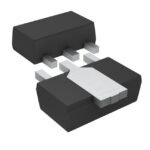 2SAR554PT100

The activity of extra discounts on wholesale prices is in full swing…
Please fill in your contact information and we will send you the latest wholesale price list.





