 ChipApex | Global Electronic Components Supplier
SEARCH
Search Product
Search Post
— IC芯片 | 连接器 | 传感器 | 被动器件 —
Search productSearch post
— IC芯片 | 连接器 | 传感器 | 被动器件 —
Consult the customer manager about the wholesale price.
consultation hotline:86-132-6715-2157
email:[email protected]
Contact the product manager for consultation. One-stop consultation is available.
Do you want a lower wholesale price? Please send us your inquiry and we will reply immediately.
The CEL 2SC5338-AZ is a discontinued NPN silicon RF transistor designed for high-frequency low distortion amplifier applications. It features a 4-pin Power Minimold package and operates with a collector-emitter voltage of 12 V and a maximum collector current of 150 mA. The device provides a typical gain bandwidth product (fT) of 6.0 GHz at VCE = 5 V and IC = 50 mA. At 1 GHz, it delivers an insertion power gain of 10 dB typically. Key electrical characteristics include a reverse transfer capacitance of 1.0 pF and low intermodulation distortion levels of -55 dB (IM2) and -76 dB (IM3).
This component is officially marked as discontinued by the manufacturer. Verification of availability should be conducted through authorized distributors or secondary market channels. Confirm the specific ordering suffix matches the required supply form, such as magazine cases or embossed taping, as standard production has ceased.
Select this component based on its specific NPN silicon construction and 4-pin Power Minimold package requirements. Ensure the design accommodates the 12 V collector-emitter voltage limit and 150 mA maximum collector current. Verify that the operating frequency aligns with the 6.0 GHz gain bandwidth product and that the thermal dissipation capabilities meet the system's ambient temperature constraints.
The 2SC5338-AZ is functionally equivalent to the NE462M02-AZ. Both part numbers refer to the same NPN silicon RF transistor manufactured by California Eastern Laboratories (CEL), now part of Renesas Electronics. The datasheet lists them together under the document number P10940EJ2V0DS00, indicating they share identical specifications and physical characteristics.
No public confirmed substitute part numbers are available in the provided documentation. As the component is discontinued, alternative sourcing requires independent engineering validation of pinouts and electrical parameters against potential replacement devices.
The typical insertion power gain (|S21e|^2) is 10 dB when measured at VCE = 5 V, IC = 50 mA, and f = 1 GHz.
The absolute maximum ratings are 25 V for Collector to Base Voltage (VCBO), 12 V for Collector to Emitter Voltage (VCEO), and 2.5 V for Emitter to Base Voltage (VEBO).
The hFE is classified into three ranks: SH (50 to 100), SF (80 to 160), and SE (125 to 250), measured at VCE = 5 V and IC = 50 mA using pulse measurement conditions.
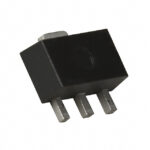 2SC5338-AZ
The activity of extra discounts on wholesale prices is in full swing…
Please fill in your contact information and we will send you the latest wholesale price list.





