ChipApex | Global Electronic Components Supplier

SEARCH
Search Product
Search Post
— IC芯片 | 连接器 | 传感器 | 被动器件 —
Search productSearch post
— IC芯片 | 连接器 | 传感器 | 被动器件 —
Consult the customer manager about the wholesale price.
consultation hotline:86-132-6715-2157
email:[email protected]
Contact the product manager for consultation. One-stop consultation is available.
Do you want a lower wholesale price? Please send us your inquiry and we will reply immediately.
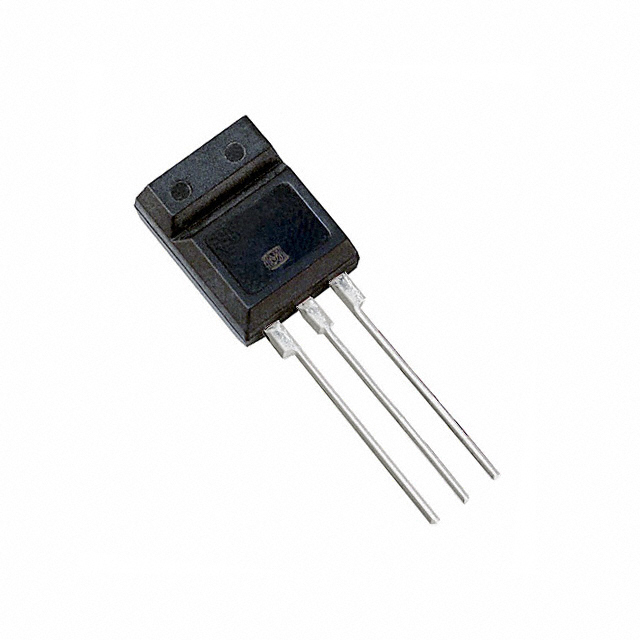
2SD11990S is listed in the Single Bipolar Transistors range at ChipApex. The manufacturer field lists Panasonic Electronic Components. Its product description is TRANS NPN 40V 0.05A M-A1. Review the specifications below when checking this part for your BOM.
The Panasonic 2SD1199 is a silicon NPN epitaxial planar transistor designed for low-frequency amplification. It features a high forward current transfer ratio (hFE) and low collector-to-emitter saturation voltage. The device supports a maximum collector current of 50 mA and a collector power dissipation of 400 mW at 25°C ambient temperature. It operates within a junction temperature range of -55°C to +150°C and utilizes an M-A1 package.
Verify the current lifecycle status before procurement, as this component may be classified under maintenance or discontinued stages. Consult official Panasonic channels for the most up-to-date Product Standards and availability information. Ensure compliance with export control laws if applicable. Confirm that the specific application aligns with standard usage guidelines rather than specialized safety-critical environments.
Select this component for applications requiring low-frequency amplification with minimal noise characteristics. Consider the M-A1 package for ease of automatic and manual insertion. Evaluate the thermal environment against the 400 mW dissipation limit. Verify that the required hFE rank meets the circuit's gain specifications.
This part belongs to the Panasonic 2SD series of silicon NPN transistors. It is specifically engineered for general-purpose low-frequency amplification tasks. The M-A1 package facilitates flexible mounting options on printed circuit boards.
Consult official Panasonic documentation for verified substitute part numbers. Cross-referencing with other manufacturers requires careful validation of electrical parameters and physical dimensions.
The maximum continuous collector current (IC) is rated at 50 mA.
No, it is designed for low-frequency amplification with a maximum collector-emitter voltage of 40 V.
The transition frequency (fT) is typically 120 MHz under specified test conditions.
Explore related parts through Bipolar (BJT), Transistors, Discrete Semiconductor Products, all product categories.
 2SD11990S

The activity of extra discounts on wholesale prices is in full swing…
Please fill in your contact information and we will send you the latest wholesale price list.