ChipApex | Global Electronic Components Supplier

SEARCH
Search Product
Search Post
— IC芯片 | 连接器 | 传感器 | 被动器件 —
Search productSearch post
— IC芯片 | 连接器 | 传感器 | 被动器件 —
Consult the customer manager about the wholesale price.
consultation hotline:86-132-6715-2157
email:[email protected]
Contact the product manager for consultation. One-stop consultation is available.
Do you want a lower wholesale price? Please send us your inquiry and we will reply immediately.
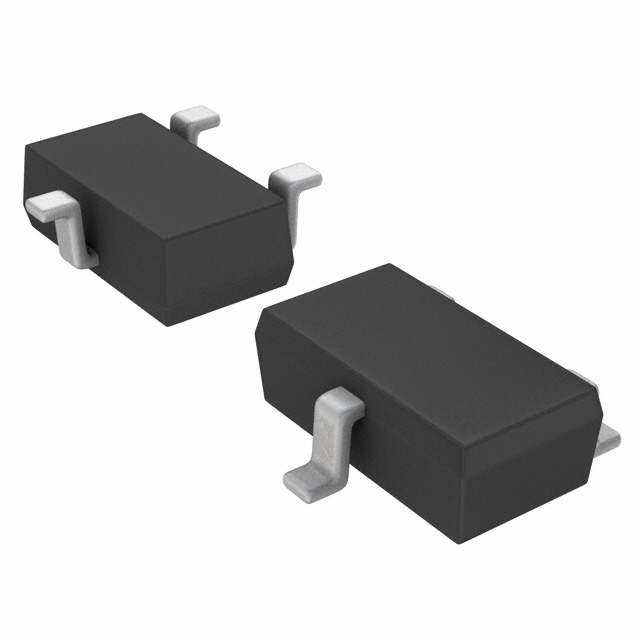
The 2SD2670TL is an NPN silicon low-frequency amplifier transistor manufactured by ROHM Semiconductor. It utilizes the TSMT3 surface-mount package, measuring 2.9 mm by 2.8 mm with a maximum height of 1.0 mm. The device supports a collector current of up to 1.5 A and features a low collector-emitter saturation voltage of 250 mV at Ic=1.5A and Ib=30mA. Absolute maximum ratings include a collector-base voltage of 40 V, a collector-emitter voltage of 30 V, and an emitter-base voltage of 6 V. Power dissipation is rated at 500 mW, with an operating junction temperature range extending up to +150°C.
Verify the specific ordering suffix against official ROHM documentation to confirm package type and tape-and-reel specifications. Ensure compatibility with RoHS directives if required by your manufacturing standards. Cross-reference the datasheet revision date to confirm the accuracy of absolute maximum ratings and thermal characteristics before finalizing component selection for production.
Select this component when designing circuits that require moderate voltage blocking capabilities combined with significant current drive capacity in a compact footprint. The TSMT3 package offers a balance between thermal performance and board space efficiency. Consider the hFE gain range specified in the full datasheet for biasing calculations to ensure stable operation within the intended low-frequency application parameters.
This part belongs to the 2SD series of bipolar junction transistors from ROHM Semiconductor. These devices are engineered for general-purpose switching and amplification tasks. The 2SD2670TL specifically targets applications needing robust current handling in small surface-mount formats, distinguishing it from higher-voltage or lower-power variants within the broader transistor portfolio.
Consult official ROHM substitution guides for verified equivalents. Generic replacements may differ in saturation voltage or package dimensions. Verify pinout compatibility and thermal resistance values before integrating alternative components into existing designs.
 2SD2670TL

The activity of extra discounts on wholesale prices is in full swing…
Please fill in your contact information and we will send you the latest wholesale price list.