 ChipApex | Global Electronic Components Supplier

SEARCH
Search Product
Search Post
— IC芯片 | 连接器 | 传感器 | 被动器件 —
Search productSearch post
— IC芯片 | 连接器 | 传感器 | 被动器件 —
Consult the customer manager about the wholesale price.
consultation hotline:86-132-6715-2157
email:[email protected]
Contact the product manager for consultation. One-stop consultation is available.
Do you want a lower wholesale price? Please send us your inquiry and we will reply immediately.
The 2SD789E-E is a silicon NPN epitaxial planar transistor manufactured by Renesas Electronics Corporation. It belongs to the small signal bipolar (BJT) transistor category, designed for general-purpose amplification and switching applications. The device features a compact surface-mount package suitable for automated assembly processes. It operates within standard commercial temperature ranges and complies with environmental regulations including RoHS standards. The component utilizes advanced epitaxial layer technology to ensure reliable performance in low-power electronic circuits.
Verify the manufacturer part number against official Renesas documentation to confirm authenticity. Ensure the received components match the specified NPN epitaxial planar structure. Check for RoHS compliance markings on the packaging. Confirm that the supplier provides valid traceability records. Validate that the device meets the required environmental specifications for the intended application environment before integration.
Select this component when a small signal NPN transistor is required for low-power applications. Consider its epitaxial planar construction for consistent performance. Evaluate the package type compatibility with existing PCB layouts. Assess the thermal requirements against the device's operational limits. Compare alternative transistors based on gain and switching speed if specific circuit parameters differ from standard general-purpose designs.
This transistor is part of Renesas Electronics Corporation's discrete semiconductor portfolio. It complements their broader range of small signal devices used in various electronic assemblies. The product line focuses on providing reliable components for mass-produced consumer and industrial electronics. Renesas leverages established fabrication technologies to maintain quality standards across its transistor offerings.
Consult official Renesas substitution guides for direct equivalents. Verify pinout compatibility and electrical characteristics before replacing. Ensure thermal and mechanical constraints are met by any substitute component.
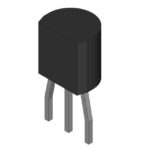 2SD789E-E

The activity of extra discounts on wholesale prices is in full swing…
Please fill in your contact information and we will send you the latest wholesale price list.





