 ChipApex | Global Electronic Components Supplier
SEARCH
Search Product
Search Post
— IC芯片 | 连接器 | 传感器 | 被动器件 —
Search productSearch post
— IC芯片 | 连接器 | 传感器 | 被动器件 —
Consult the customer manager about the wholesale price.
consultation hotline:86-132-6715-2157
email:[email protected]
Contact the product manager for consultation. One-stop consultation is available.
Do you want a lower wholesale price? Please send us your inquiry and we will reply immediately.
The Sanyo 2SK1430 is a single-element N-channel silicon power MOSFET designed for high-power switching applications. It features a maximum drain current of 10A and a minimum drain-source breakdown voltage of 100V. The device exhibits a maximum on-resistance of 0.16 ohms and supports a peak pulsed drain current of 40A. It operates in depletion mode within a TO-220AB flange mount package, providing an isolated case connection. The component is rated for a maximum power dissipation of 25W.
Verify the specific suffix designation (e.g., -YA or -RB) during procurement, as these indicate distinct manufacturing batches or minor specification variations within the same base model family. Confirm RoHS compliance status with the supplier, as historical data indicates some variants may not meet current environmental standards. Ensure the TO-220AB package dimensions match your PCB footprint requirements before finalizing orders.
Select this component when depletion mode behavior is explicitly required by the circuit design, distinguishing it from standard enhancement-mode MOSFETs. Evaluate the 0.16 ohm on-resistance against thermal management capabilities to ensure the 25W dissipation limit is not exceeded under continuous load conditions. Consider the 100V breakdown voltage margin relative to the system's maximum operating voltage spikes.
This device belongs to the Sanyo power transistor lineup, specifically engineered for robust performance in discrete semiconductor applications. As an N-channel silicon MOSFET, it serves as a fundamental switching element in various electronic systems. The TO-220AB package provides a standardized mechanical interface for thermal management, ensuring reliable operation in demanding environments.
Cross-reference with other Sanyo depletion mode MOSFETs sharing identical pinouts and voltage ratings. Verify that substitute components maintain the 10A current handling capability and comparable on-resistance values to preserve circuit efficiency and thermal performance without redesigning the heatsinking infrastructure.
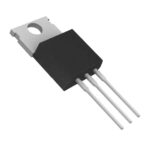 2SK1430
The activity of extra discounts on wholesale prices is in full swing…
Please fill in your contact information and we will send you the latest wholesale price list.





