ChipApex | Global Electronic Components Supplier
SEARCH
Search Product
Search Post
— IC芯片 | 连接器 | 传感器 | 被动器件 —
Search productSearch post
— IC芯片 | 连接器 | 传感器 | 被动器件 —
Consult the customer manager about the wholesale price.
consultation hotline:86-132-6715-2157
email:[email protected]
Contact the product manager for consultation. One-stop consultation is available.
Do you want a lower wholesale price? Please send us your inquiry and we will reply immediately.
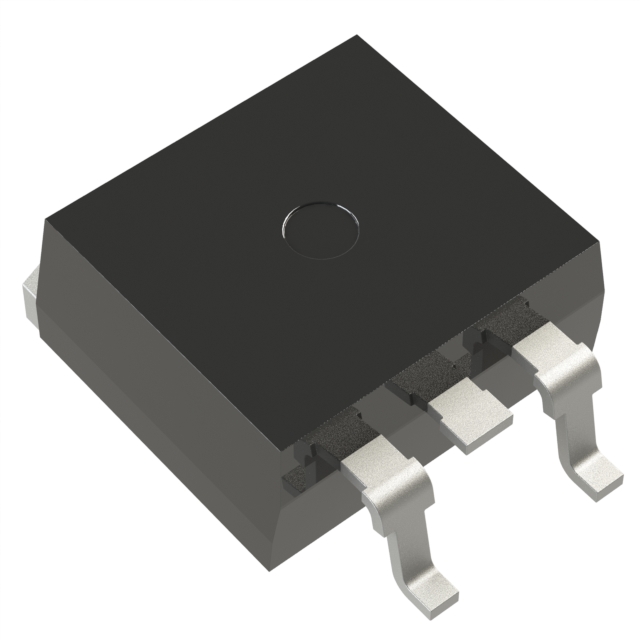
The Sanken Electric USA Inc. 2SK3800VL is an N-channel silicon MOSFET housed in a TO-220S package. It features a maximum drain-source voltage of 40V and a continuous drain current rating of 80A at 25°C case temperature. The device exhibits a low on-resistance of 5.0mΩ at VGS=10V and ID=35A, with a gate threshold voltage ranging from 2.0V to 4.0V. Key electrical characteristics include a reverse diode forward voltage of 0.9V at ISD=50A and a unclamped inductive switching energy capability of 400mJ.
Verify the specific ordering suffix against official Sanken Electric documentation to confirm exact mechanical or electrical variations. Ensure component authenticity through authorized distribution channels. Confirm that the TO-220S package dimensions match your PCB footprint requirements before finalizing procurement orders.
Select this component for low-voltage, high-current switching applications requiring robust avalanche performance. Evaluate the thermal management strategy based on the 62.5°C/W junction-to-ambient thermal resistance if case cooling is not utilized. Consider the 40V voltage headroom relative to system operating voltages to ensure reliable operation within absolute maximum ratings.
This part belongs to Sanken Electric's discrete semiconductor lineup, specifically designed for power electronics. The manufacturer specializes in components for home appliances, automobiles, and industrial equipment. This MOSFET series supports power conversion technologies aimed at improving efficiency in various electronic systems.
Consult official Sanken Electric substitution guides for verified equivalents. Do not assume pin-compatible alternatives from other manufacturers share identical avalanche ratings or thermal characteristics without direct datasheet comparison.
The device guarantees an EAS rating of 400mJ under test conditions of VDD=20V, L=1mH, IL=20A, and RG=50Ω.
The RDS(ON) increases as the junction temperature rises. Graphs indicate significant variation between -55°C and 150°C, requiring thermal derating calculations for high-temperature environments.
 2SK3800VL
The activity of extra discounts on wholesale prices is in full swing…
Please fill in your contact information and we will send you the latest wholesale price list.