 ChipApex | Global Electronic Components Supplier
SEARCH
Search Product
Search Post
— IC芯片 | 连接器 | 传感器 | 被动器件 —
Search productSearch post
— IC芯片 | 连接器 | 传感器 | 被动器件 —
Consult the customer manager about the wholesale price.
consultation hotline:86-132-6715-2157
email:[email protected]
Contact the product manager for consultation. One-stop consultation is available.
Do you want a lower wholesale price? Please send us your inquiry and we will reply immediately.
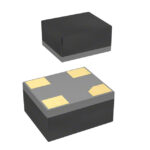
The ATF-551M4-BLK is a monolithic microwave integrated circuit (MMIC) from Broadcom Limited, designed for high-frequency applications. This specific variant features a black epoxy coating on the package surface, which serves as an identification marker distinct from standard uncoated versions. The device typically operates within the Ka-band frequency range, providing amplification capabilities essential for radar and communication systems. Key electrical parameters such as gain, noise figure, and output power are defined by the underlying ATF-551M4 architecture, though exact values require consultation of the official datasheet. The component utilizes a surface-mount package suitable for automated assembly processes in high-volume manufacturing environments.
Verify the black coating specification against procurement requirements, as it may indicate a specific lot or revision. Confirm the part number matches the exact suffix to ensure compatibility with existing inventory. Request manufacturer documentation to validate the electrical characteristics associated with this coated variant. Ensure storage conditions meet moisture sensitivity level requirements prior to assembly.
Select this variant when visual identification of the component is required during assembly or inspection. Compare the black-coated version against standard uncoated parts to determine if the coating offers any additional environmental protection or if it is purely for identification. Evaluate the Ka-band performance metrics against system requirements for gain and noise figure. Consider the surface-mount package type for compatibility with existing PCB footprints.
The ATF-551 series comprises various MMICs designed for broadband amplification. The ATF-551M4 specifically targets higher frequency operations. The -BLK suffix denotes the black epoxy coating, distinguishing it from other packaging variants within the same functional family. This series is commonly used in defense and aerospace applications where reliability and performance at millimeter-wave frequencies are critical.
Check for direct substitutes with identical pinouts and electrical specifications. Verify if alternative manufacturers offer comparable Ka-band MMICs with similar gain and noise characteristics. Ensure that any replacement part accommodates the same surface-mount package dimensions.


 ATF-551M4-BLK
The activity of extra discounts on wholesale prices is in full swing…
Please fill in your contact information and we will send you the latest wholesale price list.




