ChipApex | Global Electronic Components Supplier
SEARCH
Search Product
Search Post
— IC芯片 | 连接器 | 传感器 | 被动器件 —
Search productSearch post
— IC芯片 | 连接器 | 传感器 | 被动器件 —
Consult the customer manager about the wholesale price.
consultation hotline:86-132-6715-2157
email:[email protected]
Contact the product manager for consultation. One-stop consultation is available.
Do you want a lower wholesale price? Please send us your inquiry and we will reply immediately.
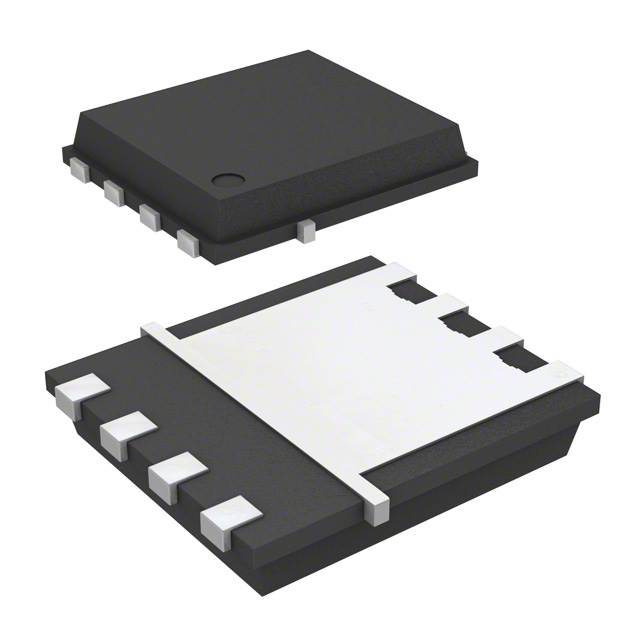
The AUIRFN8459TR is an automotive-grade dual N-channel HEXFET power MOSFET in a Dual PQFN 5mm x 6mm package. It features a 40V drain-source breakdown voltage and a maximum on-resistance of 5.9mΩ at VGS=10V. The device supports continuous drain currents up to 70A (silicon limited) or 50A (package limited). Key electrical parameters include a gate threshold voltage range of 2.2V to 3.9V, total gate charge of 40nC typ., and a junction temperature operating range from -55°C to +175°C.
Verify the component matches the specific Dual PQFN 5x6mm package dimensions and pinout requirements for your PCB footprint. Confirm that the supplier provides documentation proving AEC-Q101 automotive qualification status. Ensure the ordering suffix corresponds to the tape and reel packaging format required by your assembly line equipment. Check for any recent product change notifications regarding manufacturing site or material composition.
Select this component when designing circuits requiring low conduction losses in a small form factor for 12V automotive environments. Evaluate the thermal resistance characteristics against your board's copper area and cooling capabilities. Consider the fast switching speed and gate charge values for high-frequency PWM applications. Verify that the 40V rating provides sufficient headroom for your system's transient voltage spikes.
This part belongs to the AUIRFN series of automotive power MOSFETs manufactured by Infineon Technologies (formerly International Rectifier). It utilizes COOLiRFET technology to minimize silicon area while maintaining high current handling. The 'AU' prefix indicates adherence to automotive industry requirements for product discontinuance and process change notifications.
Direct substitutes within the same family include the AUIRFN8458, which offers higher on-resistance but similar packaging. Cross-referencing should verify identical pinouts and thermal characteristics. Any replacement must maintain AEC-Q101 compliance if used in qualified automotive systems.
Yes, the datasheet explicitly states that repetitive avalanche is allowed up to the maximum junction temperature (Tjmax).
The silicon-limited current is 70A, representing the theoretical limit of the die. The package-limited current is 50A, constrained by the bond wires and lead frame heating.
Yes, it is qualified according to the AEC-Q101 standard for automotive grade components.
 AUIRFN8459TR
The activity of extra discounts on wholesale prices is in full swing…
Please fill in your contact information and we will send you the latest wholesale price list.