ChipApex | Global Electronic Components Supplier
SEARCH
Search Product
Search Post
— IC芯片 | 连接器 | 传感器 | 被动器件 —
Search productSearch post
— IC芯片 | 连接器 | 传感器 | 被动器件 —
Consult the customer manager about the wholesale price.
consultation hotline:86-132-6715-2157
email:[email protected]
Contact the product manager for consultation. One-stop consultation is available.
Do you want a lower wholesale price? Please send us your inquiry and we will reply immediately.
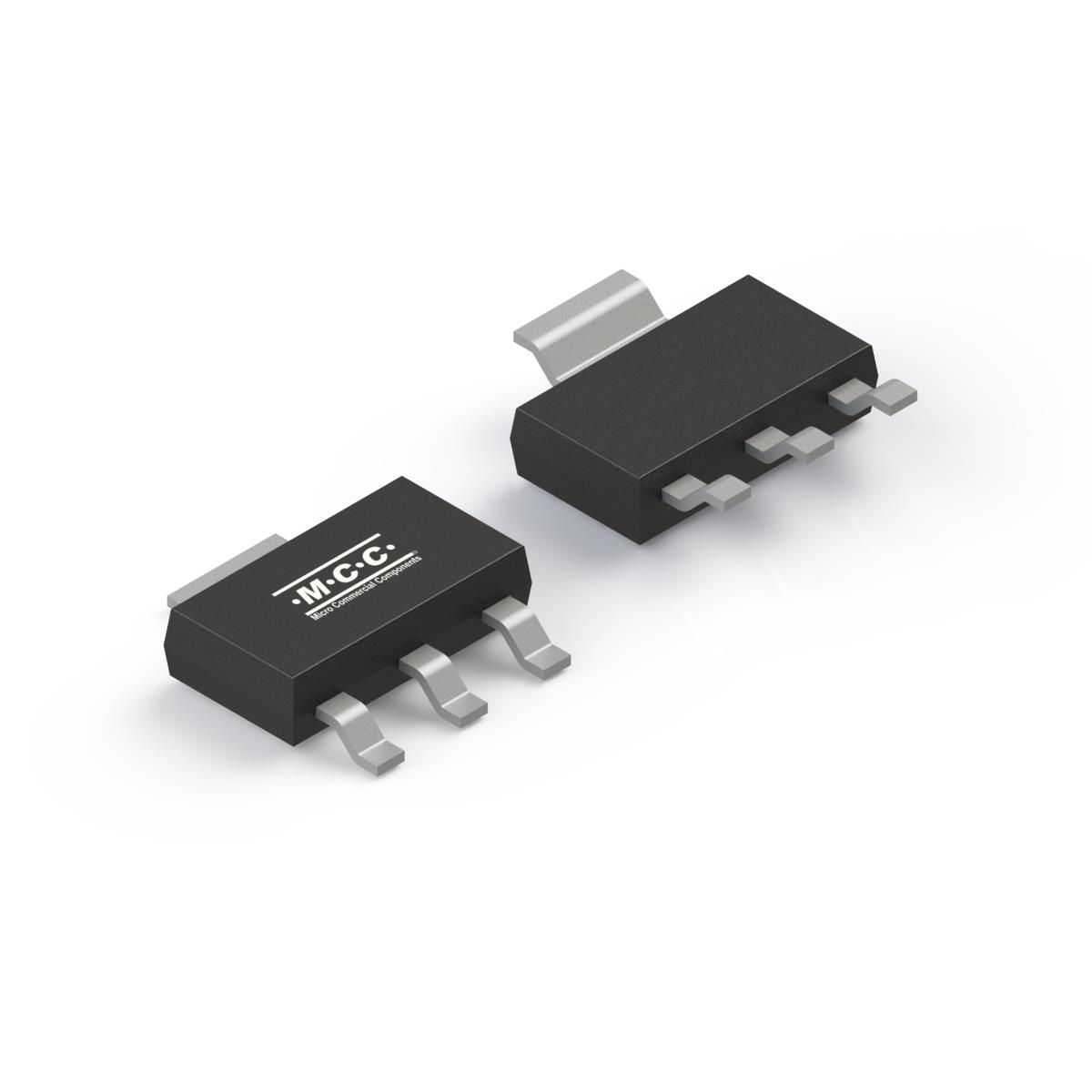
The BCP69-25-TP is a PNP plastic-encapsulated transistor from Micro Commercial Components, housed in an SOT-223 package. It features a collector-emitter voltage of -20 V and a maximum DC collector current of -1 A. The device offers a power dissipation rating of 1 W at 25°C with a thermal resistance of 125 °C/W. Electrical characteristics include a transition frequency of 40 MHz and a minimum DC current gain (hFE) of 160 for the -25 variant. Operating junction temperature ranges from -55°C to +150°C.
Verify that the ordering suffix -TP corresponds to the Tape & Reel packing format containing 2,500 pieces per reel as specified by the manufacturer. Confirm the specific hFE binning requirements for the -25 designation during component selection. Ensure sourcing channels are authorized distributors to guarantee genuine parts and full traceability according to Micro Commercial Components quality standards.
Select the BCP69-25-TP when a PNP transistor with -1 A continuous collector current and -20 V breakdown voltage is required. The -25 suffix indicates a specific DC current gain range of 160 to 375. Consider the SOT-223 package dimensions and the 125 °C/W thermal resistance for heat dissipation planning. Verify compatibility with the intended operating temperature range of -55°C to +150°C.
This component belongs to the BCP69 series of PNP medium power transistors designed for surface-mounted applications. The series includes variants such as the BCP69-16 and BCP69-25, differentiated primarily by their DC current gain classifications. The device utilizes silicon technology within a plastic-encapsulated SOT-223 housing, providing a robust solution for general-purpose switching and amplification tasks in consumer and industrial electronics.
Cross-reference with other PNP transistors in the SOT-223 package offering similar -20 V VCEO and -1 A IC ratings. Verify pinout compatibility, specifically the exposed collector pad configuration typical of SOT-223 packages. Ensure replacement devices meet the same thermal resistance and power dissipation requirements for direct substitution.
 BCP69-25-TP
The activity of extra discounts on wholesale prices is in full swing…
Please fill in your contact information and we will send you the latest wholesale price list.