ChipApex | Global Electronic Components Supplier
SEARCH
Search Product
Search Post
— IC芯片 | 连接器 | 传感器 | 被动器件 —
Search productSearch post
— IC芯片 | 连接器 | 传感器 | 被动器件 —
Consult the customer manager about the wholesale price.
consultation hotline:86-132-6715-2157
email:[email protected]
Contact the product manager for consultation. One-stop consultation is available.
Do you want a lower wholesale price? Please send us your inquiry and we will reply immediately.
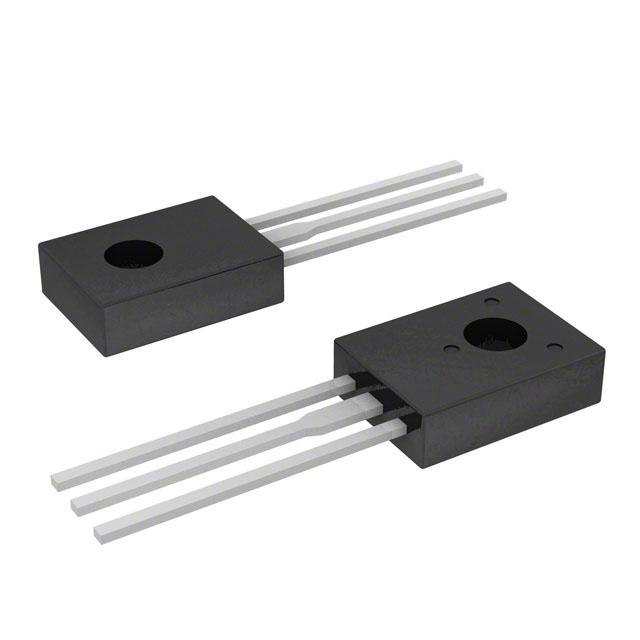
The BD436S is a PNP epitaxial silicon transistor from onsemi, designed for general-purpose amplifier applications. It features a low saturation voltage (VCE(sat)) and is qualified to AEC-Q101 automotive standards. The device operates with a maximum collector-emitter voltage of 32V and supports a continuous collector current of 4A. Packaged in TO-126-3, it dissipates up to 36W of power at 25°C case temperature. Key electrical parameters include a transition frequency of 3MHz and a maximum collector cutoff current of 100µA.
Verify the specific datasheet revision and manufacturer origin, as the BD436S was originally developed by Fairchild Semiconductor before its acquisition by onsemi. Ensure the component matches the required TO-126-3 package style and confirms AEC-Q101 compliance for automotive integration. Cross-reference part markings against official onsemi documentation to authenticate source and prevent counterfeit substitution.
Select the BD436S when designing circuits that require a robust PNP transistor with high current handling and automotive certification. Its low saturation voltage makes it suitable for applications prioritizing efficiency in signal amplification. Consider the 32V voltage limit and 4A current capacity to ensure compatibility with system load requirements and thermal management constraints within the TO-126 form factor.
This component belongs to the broader family of PNP epitaxial silicon transistors, often grouped with variants like the BD434 and BD438. These devices share similar structural characteristics but differ in specific voltage or current ratings. The BD436S specifically targets applications needing moderate voltage isolation with high current throughput, serving as a standard discrete solution in both industrial and automotive semiconductor portfolios.
Consult official cross-reference lists for equivalents such as the BD434 or BD438 if voltage or current specifications allow. Verify pinout compatibility and thermal resistance values when substituting to maintain circuit integrity and performance levels without redesigning the PCB layout.
 BD436S
The activity of extra discounts on wholesale prices is in full swing…
Please fill in your contact information and we will send you the latest wholesale price list.