 ChipApex | Global Electronic Components Supplier
SEARCH
Search Product
Search Post
— IC芯片 | 连接器 | 传感器 | 被动器件 —
Search productSearch post
— IC芯片 | 连接器 | 传感器 | 被动器件 —
Consult the customer manager about the wholesale price.
consultation hotline:86-132-6715-2157
email:[email protected]
Contact the product manager for consultation. One-stop consultation is available.
Do you want a lower wholesale price? Please send us your inquiry and we will reply immediately.
The BD441G is a PNP silicon bipolar junction transistor (BJT) manufactured by onsemi. It is designed for through-hole mounting in a TO-225-3 package. The device supports a maximum continuous collector current of 4 A and a collector-emitter voltage (VCEO) of 80 V. Key electrical characteristics include a collector-base voltage (VCBO) of 80 V, an emitter-base voltage (VEBO) of 5 V, and a power dissipation (Pd) of 36 W. The saturation voltage (VCEsat) is specified at 800 mV, with a gain-bandwidth product (fT) of 3 MHz. The component operates within a temperature range of -55°C to +150°C.
Verify the specific datasheet revision and RoHS compliance status directly from onsemi official documentation before integration. Confirm that the TO-225-3 package dimensions match the target PCB footprint requirements. Ensure thermal management solutions are adequate for the 36 W power dissipation limit under expected operating conditions. Cross-reference the manufacturer part number BD441G with authorized distributor listings to confirm authenticity and supply chain reliability.
Select this component when a PNP BJT with 4 A current handling and 80 V voltage rating is required in a through-hole format. The TO-225-3 package provides efficient heat dissipation for high-power applications. Consider the 3 MHz transition frequency for moderate-speed switching needs. Evaluate thermal resistance parameters against the system's heat sink capabilities to ensure operation within the +150°C maximum junction temperature limit.
The BD441G belongs to the BD44x series of PNP transistors from onsemi, which are engineered for robust power switching tasks. This series utilizes silicon technology optimized for high current density and reliable performance in industrial environments. The TO-225-3 package is a standard form factor for through-hole mounting, facilitating easy integration into legacy and new designs requiring discrete power transistors.
Consult onsemi official documentation for verified substitute part numbers. No public substitutes are confirmed in the provided data.
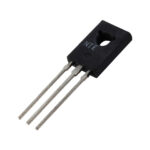 BD441G
The activity of extra discounts on wholesale prices is in full swing…
Please fill in your contact information and we will send you the latest wholesale price list.





