ChipApex | Global Electronic Components Supplier
SEARCH
Search Product
Search Post
— IC芯片 | 连接器 | 传感器 | 被动器件 —
Search productSearch post
— IC芯片 | 连接器 | 传感器 | 被动器件 —
Consult the customer manager about the wholesale price.
consultation hotline:86-132-6715-2157
email:[email protected]
Contact the product manager for consultation. One-stop consultation is available.
Do you want a lower wholesale price? Please send us your inquiry and we will reply immediately.
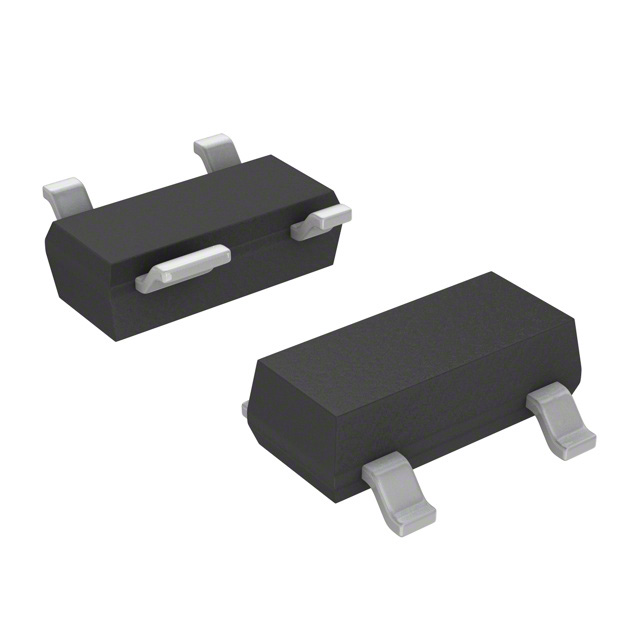
The BF2040RE6814HTSA1 is a silicon N-channel MOSFET tetrode designed for low noise and high gain applications in controlled input stages up to 1 GHz. It operates at a drain-source voltage of 8 V with a continuous drain current of 40 mA and total power dissipation of 200 mW. The device provides a typical power gain of 23 dB and a noise figure of 1.6 dB at 800 MHz, tested at VDS = 5 V, ID = 15 mA, and VG2S = 4 V. It features a gate control range of approximately 50 dB and is housed in an SOT-143R surface-mount package.
Verify component authenticity through authorized Infineon channels or certified distributors. Confirm the specific ordering suffix matches the required SOT-143R package variant. Ensure handling precautions are observed due to ESD sensitivity. Check for RoHS compliance status and verify that the part meets the required AEC-Q101 qualification standards for the intended application environment.
Select this component when designing RF stages requiring high gain and low noise figures around 800 MHz to 1 GHz. Consider the 8 V maximum drain-source voltage and 200 mW power dissipation limits during thermal design. The SOT-143R package requires appropriate surface mount assembly processes. Evaluate the need for external biasing networks for Gate 1 and Gate 2 to achieve the desired operating point and gain control characteristics.
This part belongs to the BF2040 family of silicon N-channel MOSFET tetrodes from Infineon Technologies. Other variants in the series include the BF2040 (SOT143 package) and BF2040W (SOT343 package). All variants share identical electrical characteristics but differ in physical package dimensions and pin configurations. The BF2040RE6814HTSA1 specifically utilizes the SOT-143R footprint.
Direct substitutes within the same family include BF2040E6814HTSA1 (SOT143) and BF2040WH6814 (SOT343). These alternatives offer identical electrical specifications but require PCB layout adjustments due to different pinouts and package dimensions. Verify mechanical fit and thermal resistance differences before implementation.
 BF2040RE6814HTSA1
The activity of extra discounts on wholesale prices is in full swing…
Please fill in your contact information and we will send you the latest wholesale price list.