ChipApex | Global Electronic Components Supplier

SEARCH
Search Product
Search Post
Search productSearch post
Consult the customer manager about the wholesale price.
consultation hotline:86-132-6715-2157
email:[email protected]
Contact the product manager for consultation. One-stop consultation is available.
Do you want a lower wholesale price? Please send us your inquiry and we will reply immediately.
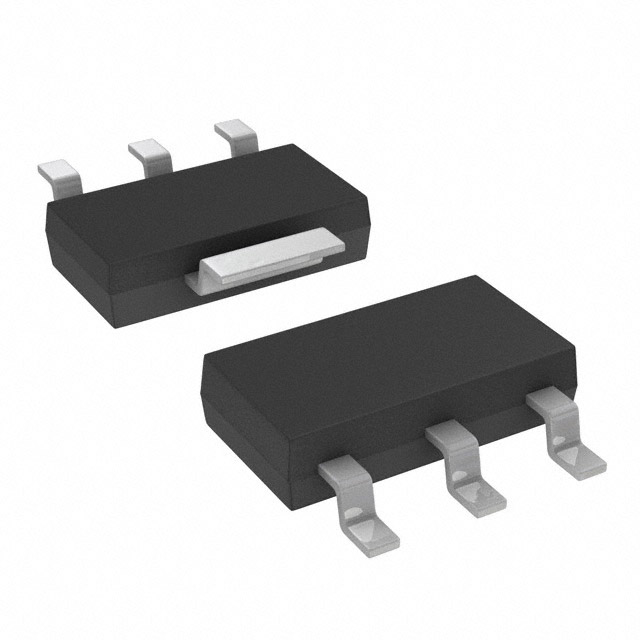
BFG135,115 is listed in the Bipolar RF Transistors range at ChipApex. The manufacturer field lists NXP USA Inc. Its product description is RF TRANS NPN 15V 7GHZ SC-73. Review the specifications below when checking this part for your BOM.
The BFG135,115 is an NPN silicon planar epitaxial transistor manufactured by NXP USA Inc., housed in a plastic SOT223 (SC-73) surface-mount package. Designed for wideband amplifier applications, it features small emitter structures with integrated emitter-ballasting resistors to ensure high output voltage capabilities at low distortion levels. The device provides a transition frequency of 7 GHz and a maximum unilateral power gain of 16 dB at 500 MHz. It supports a DC collector current of up to 150 mA and total power dissipation of 1 W, with a junction temperature rating of 175 °C.
Verify component authenticity through authorized channels as this part may be discontinued. Confirm that the SOT223 package orientation matches design requirements. Ensure thermal management strategies align with the specified junction temperature limits. Review the latest product status documentation before initiating designs.
Select this component when designing wideband amplifiers requiring high linearity and low distortion. Consider the 7 GHz transition frequency for RF applications. Evaluate the 1 W power dissipation capability against thermal constraints. Verify compatibility with the SOT223 footprint during PCB layout.
The BFG135 belongs to the BFG13 series of NPN wideband transistors from NXP Semiconductors. It shares functional similarities with other devices in the family but is distinguished by its specific 7 GHz transition frequency and SOT223 packaging configuration designed for efficient heat dissipation in surface-mount applications.
Publicly confirmed substitute part numbers are not available in the provided documentation. Consult official NXP resources for potential alternatives if this component is no longer manufactured.
They ensure high output voltage capabilities at a low distortion level.
The distribution of active areas across the surface provides an excellent temperature profile.
The transition frequency is 7 GHz under standard test conditions.
Explore related parts through Bipolar (BJT), Transistors, Discrete Semiconductor Products, all product categories.
 BFG135,115

The activity of extra discounts on wholesale prices is in full swing…
Please fill in your contact information and we will send you the latest wholesale price list.