ChipApex | Global Electronic Components Supplier
SEARCH
Search Product
Search Post
— IC芯片 | 连接器 | 传感器 | 被动器件 —
Search productSearch post
— IC芯片 | 连接器 | 传感器 | 被动器件 —
Consult the customer manager about the wholesale price.
consultation hotline:86-132-6715-2157
email:[email protected]
Contact the product manager for consultation. One-stop consultation is available.
Do you want a lower wholesale price? Please send us your inquiry and we will reply immediately.
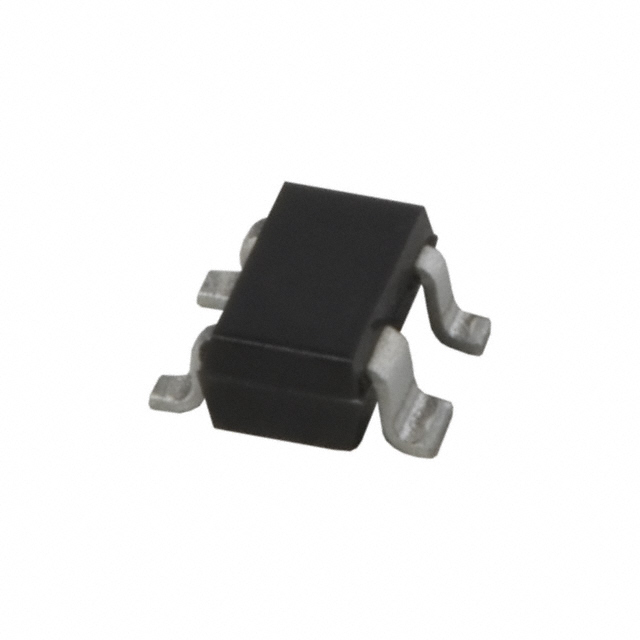
The BFG520W,115 is an NPN silicon planar epitaxial transistor manufactured by NXP Semiconductors. It is housed in a 4-pin dual-emitter SOT343N plastic surface-mount package. Key electrical specifications include a collector-base voltage of 20 V, a collector-emitter voltage of 15 V, and a maximum DC collector current of 70 mA. The device features a transition frequency of 9 GHz at 20 mA and 6 V. At 900 MHz with IC=20 mA and VCE=6 V, it provides a typical unilateral power gain of 17 dB and an insertion power gain of 17 dB. The minimum noise figure is 1.1 dB at 900 MHz with IC=5 mA and VCE=6 V.
Verify the specific ordering code BFG520W,115 against the manufacturer's latest product data sheet to confirm current production status and availability. Ensure that the SOT343N package dimensions and pin configuration match the design requirements. Cross-reference thermal resistance values for proper heat dissipation planning in the final assembly.
Select this component for wideband RF applications requiring high gain and low noise in the GHz range. Consider the 70 mA DC collector current limit and 500 mW total power dissipation capability when designing bias circuits. Evaluate the SOT343N package size constraints and ensure compatibility with the intended PCB layout and soldering processes.
The BFG520W belongs to the NPN 9 GHz wideband transistor family produced by NXP Semiconductors. It is designed for high-frequency performance using silicon planar epitaxial technology. The device is often compared with similar models like the BFG505W within the same product line, sharing comparable electrical characteristics and application scopes for RF front-end modules.
Direct substitutes include the BFG520W/X variant, which shares identical electrical specifications and package type. Verify pinout compatibility and thermal characteristics before substitution. Other NXP wideband transistors may offer similar performance but require circuit re-evaluation due to potential differences in packaging or specific parameter tolerances.
 BFG520W,115
The activity of extra discounts on wholesale prices is in full swing…
Please fill in your contact information and we will send you the latest wholesale price list.