ChipApex | Global Electronic Components Supplier
SEARCH
Search Product
Search Post
— IC芯片 | 连接器 | 传感器 | 被动器件 —
Search productSearch post
— IC芯片 | 连接器 | 传感器 | 被动器件 —
Consult the customer manager about the wholesale price.
consultation hotline:86-132-6715-2157
email:[email protected]
Contact the product manager for consultation. One-stop consultation is available.
Do you want a lower wholesale price? Please send us your inquiry and we will reply immediately.
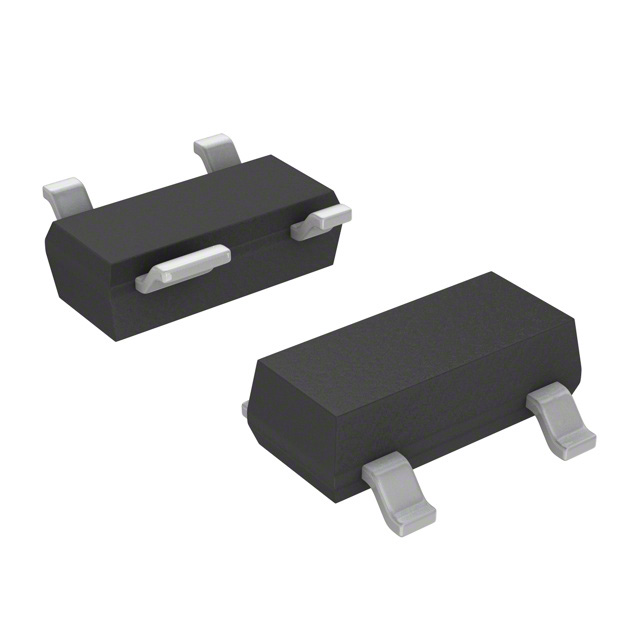
The BFG540/XR,215 is an NPN silicon planar epitaxial transistor designed for wideband applications in the GHz range. It features a maximum transition frequency of 9 GHz and a maximum unilateral power gain of 18 dB at 900 MHz. The device supports a DC collector current of 120 mA and dissipates up to 400 mW of total power. Key electrical parameters include a collector-emitter voltage of 15 V, a minimum DC current gain (hFE) of 60, and a noise figure as low as 1.3 dB at 900 MHz with 10 mA collector current. It utilizes gold metallization for reliability and is housed in a surface-mount SOT143R package.
Verify component authenticity through authorized NXP Semiconductors distributors or official channels. Confirm the specific XR suffix corresponds to the SOT143R reverse pinning configuration required by your design. Check for RoHS compliance status and ensure storage conditions remain within the specified temperature range to maintain device integrity prior to assembly.
Select this component when designing circuits requiring high-frequency performance up to 9 GHz with low noise characteristics. Ensure the biasing network supports the recommended operating point of 40 mA collector current and 8 V collector-emitter voltage for optimal gain and linearity. Verify that the PCB layout accommodates the SOT143R footprint and accounts for thermal dissipation limits under continuous wave operation.
This part belongs to the BFG540 family of NPN wideband transistors manufactured by NXP Semiconductors. The XR variant specifically denotes the SOT143R plastic surface-mounted package with reverse pinning configuration. This family is engineered for GHz-range applications where high power gain and low noise are critical requirements for signal processing.
Direct substitutes within the same package and pinout include the BFG540/X. Other family members like the BFR540 or BFS540 offer similar electrical characteristics but may differ in pin configuration or package type. Always verify pin compatibility and thermal resistance values before substituting.
 BFG540/XR,215
The activity of extra discounts on wholesale prices is in full swing…
Please fill in your contact information and we will send you the latest wholesale price list.