ChipApex | Global Electronic Components Supplier
SEARCH
Search Product
Search Post
— IC芯片 | 连接器 | 传感器 | 被动器件 —
Search productSearch post
— IC芯片 | 连接器 | 传感器 | 被动器件 —
Consult the customer manager about the wholesale price.
consultation hotline:86-132-6715-2157
email:[email protected]
Contact the product manager for consultation. One-stop consultation is available.
Do you want a lower wholesale price? Please send us your inquiry and we will reply immediately.
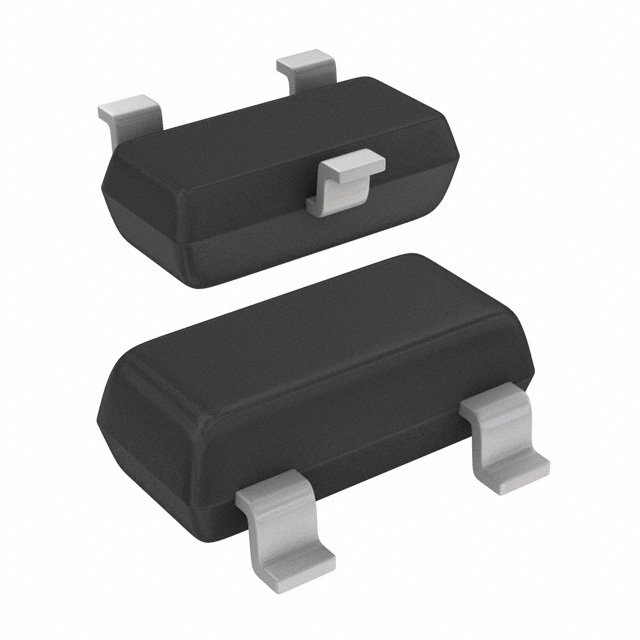
The BFT46,215 is an N-channel symmetrical planar epitaxial junction Field-Effect Transistor manufactured by NXP USA Inc. It is housed in a SOT-23 (TO-236AB) plastic surface-mounted package with three terminals and a 1.9 mm pitch. The device body dimensions are approximately 2.9 mm x 1.3 mm x 1 mm. As a silicon FET, it is designed for surface mounting applications. The component is identified as no longer manufactured (discontinued), with historical data sheets available for reference.
This component is officially classified as No Longer Manufactured (discontinued). Verification of current availability requires checking distributor archives or secondary markets. Historical datasheets remain accessible for design reference. Designers should confirm the specific revision status of legacy documentation before implementation. Replacement strategies must account for the discontinuation status to ensure supply chain stability for production runs.
Selection of this part requires consideration of its discontinued status. Engineers should evaluate equivalent N-channel FETs in the SOT-23 package that meet the original electrical requirements. Symmetrical characteristics may limit suitability for asymmetric circuit topologies. Verify pinout compatibility and thermal performance against modern alternatives. Review updated datasheets for any parameter shifts in potential substitute components.
The BFT46 belongs to NXP's portfolio of small-signal field-effect transistors. It utilizes planar epitaxial technology within a compact SOT-23 footprint. This packaging facilitates automated surface-mount assembly. The symmetrical structure distinguishes it from standard asymmetric FETs. Historical documentation indicates its use in general analog and digital switching roles prior to discontinuation.
Publicly confirmed direct substitute part numbers are not explicitly listed in the provided source material. Engineers should identify N-channel FETs in SOT-23 packages with comparable voltage and current ratings. Verify symmetry requirements and pinout alignment. Consult manufacturer cross-reference tools for validated replacements.
 BFT46,215
The activity of extra discounts on wholesale prices is in full swing…
Please fill in your contact information and we will send you the latest wholesale price list.