ChipApex | Global Electronic Components Supplier
SEARCH
Search Product
Search Post
— IC芯片 | 连接器 | 传感器 | 被动器件 —
Search productSearch post
— IC芯片 | 连接器 | 传感器 | 被动器件 —
Consult the customer manager about the wholesale price.
consultation hotline:86-132-6715-2157
email:[email protected]
Contact the product manager for consultation. One-stop consultation is available.
Do you want a lower wholesale price? Please send us your inquiry and we will reply immediately.
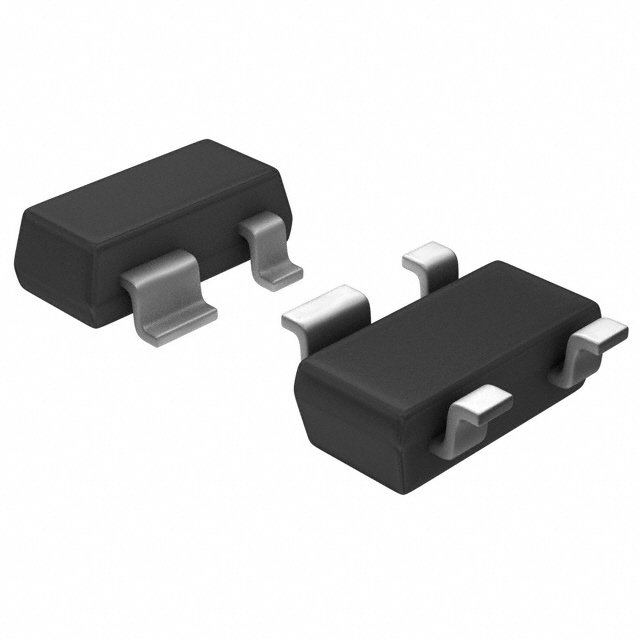
The BFU530 is an NPN silicon RF transistor designed for high-speed, low-noise applications in a plastic SOT143B package. It features 11 GHz fT technology and AEC-Q101 qualification. Key electrical parameters include a collector-base voltage of 24 V (open emitter) or 30 V (shorted base), collector-emitter voltage of 12 V (open base) or 24 V (shorted base), and a maximum collector current of 40 mA. Total power dissipation is 450 mW at a solder point temperature of 87 °C. At 900 MHz, it provides a minimum noise figure of 0.7 dB and a maximum stable gain of 21.5 dB.
Verify the specific manufacturing origin code on the component marking, as the datasheet indicates variations for devices made in Malaysia versus China. Confirm that the application environment respects the absolute maximum ratings, particularly the junction temperature limit of 150 °C and the thermal resistance constraints during soldering. Ensure ESD precautions are followed during handling.
Select this component when designing circuits requiring high supply voltages and high breakdown characteristics alongside low noise performance. The dual-emitter pinout requires careful PCB layout to manage parasitic inductance. Consider the 450 mW power dissipation limit and ensure adequate thermal management via the collector lead solder point to maintain reliability under continuous operation.
The BFU530 belongs to the BFU5 family of transistors, which includes the BFU520 and BFU550. These components are suitable for small signal to medium power applications up to 2 GHz. Design support materials, including SPICE models and S-parameters, are available for simulation. An evaluation kit containing samples and unpopulated RF amplifier PCBs is offered for development purposes.
The BFU520 and BFU550 are part of the same product family and may serve as alternatives depending on specific gain or noise requirements within the 2 GHz range. Verify pin compatibility and electrical parameter alignment with the original design specifications before substitution.
 BFU530R
The activity of extra discounts on wholesale prices is in full swing…
Please fill in your contact information and we will send you the latest wholesale price list.