ChipApex | Global Electronic Components Supplier
SEARCH
Search Product
Search Post
— IC芯片 | 连接器 | 传感器 | 被动器件 —
Search productSearch post
— IC芯片 | 连接器 | 传感器 | 被动器件 —
Consult the customer manager about the wholesale price.
consultation hotline:86-132-6715-2157
email:[email protected]
Contact the product manager for consultation. One-stop consultation is available.
Do you want a lower wholesale price? Please send us your inquiry and we will reply immediately.
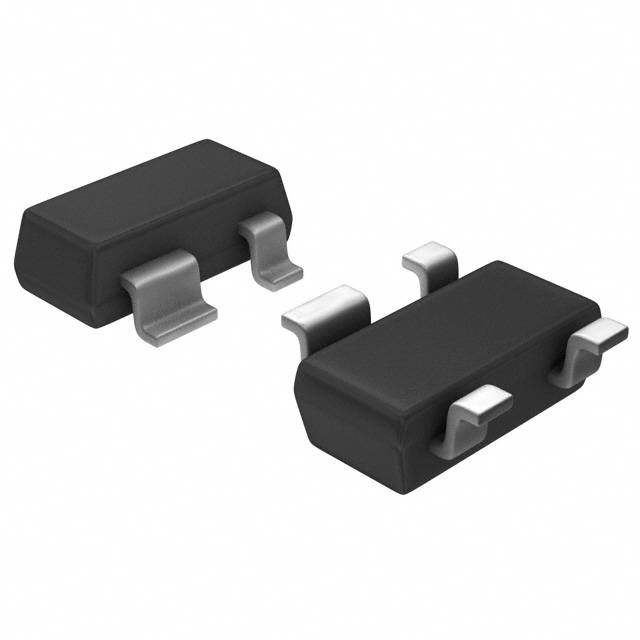
The BFU550XAR is an NPN wideband silicon RF transistor from the BFU5 family, housed in a plastic SOT143B package with four leads. It is designed for high-speed, low-noise applications up to 2 GHz and holds AEC-Q101 qualification. Key electrical parameters include a collector-emitter voltage (VCEO) of 12 V, a maximum collector current of 50 mA, and a transition frequency (fT) of 11 GHz at 900 MHz. The device provides a minimum noise figure of 0.75 dB and a maximum stable gain of 21.5 dB at 900 MHz.
Verify the specific suffix 'AR' against the official NXP ordering information table to confirm packaging details such as tape and reel specifications or marking codes. Ensure the component meets the required RoHS compliance standards for the intended manufacturing process. Cross-reference the part number with the latest datasheet revision to confirm availability status and any potential obsolescence notices before finalizing procurement plans.
Select this component when designing circuits that require high breakdown voltage combined with low noise characteristics in a compact surface-mount footprint. The dual-emitter configuration in the SOT143B package facilitates efficient thermal dissipation and improved RF performance. Consider the 11 GHz transition frequency for broadband designs extending beyond typical cellular bands while maintaining stability under varying load conditions.
The BFU550X belongs to the BFU5 series of NPN silicon RF transistors manufactured by NXP Semiconductors. This family targets small signal to medium power applications across various wireless communication standards. The BFU550X specifically emphasizes high breakdown capabilities alongside low noise figures, making it distinct within the series for applications requiring robust voltage handling in RF front-ends.
Consult the NXP BFU5xx series starter kit user manual or application notes for direct functional substitutes within the same product family. Verify pin compatibility and electrical parameter overlaps with other BFU5 variants before substitution.
 BFU550XAR
The activity of extra discounts on wholesale prices is in full swing…
Please fill in your contact information and we will send you the latest wholesale price list.