ChipApex | Global Electronic Components Supplier
SEARCH
Search Product
Search Post
— IC芯片 | 连接器 | 传感器 | 被动器件 —
Search productSearch post
— IC芯片 | 连接器 | 传感器 | 被动器件 —
Consult the customer manager about the wholesale price.
consultation hotline:86-132-6715-2157
email:[email protected]
Contact the product manager for consultation. One-stop consultation is available.
Do you want a lower wholesale price? Please send us your inquiry and we will reply immediately.
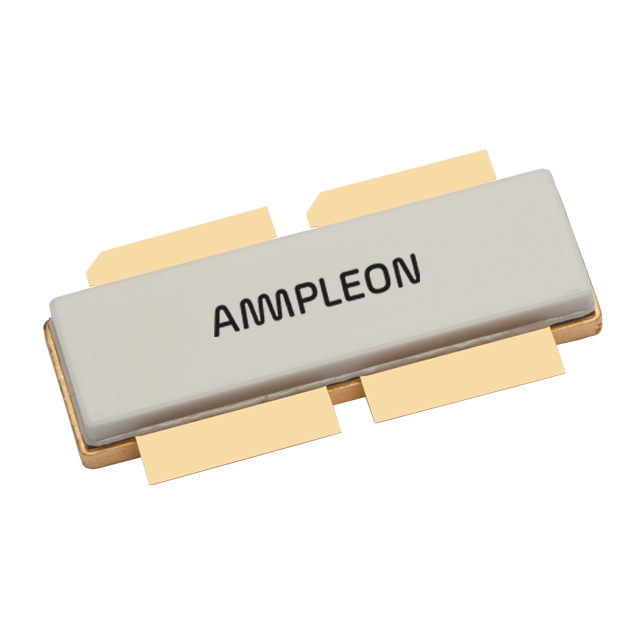
The BLF7G24LS-160P is a 160 W LDMOS power transistor designed for base station applications in the 2300 MHz to 2400 MHz frequency range. It supports single carrier IS-95 configurations with pilot, paging, sync, and six traffic channels (Walsh codes 8–13), achieving a peak-to-average ratio of 9.7 dB at 0.01% probability on the CCDF. The device operates with a drain-source voltage of 28 V and a quiescent current of 1200 mA. Key electrical parameters include a drain-source breakdown voltage of 65 V, a gate-source threshold voltage ranging from 1.5 V to 2.3 V, and a forward transconductance of 6.9 S. It features a thermal resistance from junction to case of 0.2 K/W.
Verify the specific package variant required for the design, as the LS suffix denotes an earless flanged balanced ceramic package (SOT539B). Confirm that the application environment remains within the specified absolute maximum ratings, particularly regarding junction temperature limits and load mismatch conditions. Ensure compliance with RoHS directives during procurement and assembly processes.
Select this component for high-efficiency base station amplifiers operating between 2300 MHz and 2400 MHz. The internal matching network reduces external component count, while the low thermal resistance supports stable operation under high power loads. Consider the ruggedness specifications when designing for environments with potential impedance mismatches up to 10:1 VSWR.
This part belongs to the Ampleon BLF7G series of LDMOS power transistors. The BLF7G24L-160P shares identical electrical characteristics but utilizes a flanged balanced ceramic package with mounting holes (SOT539A). Both variants are engineered for similar cellular infrastructure applications, offering high linearity and efficiency for modern wireless communication systems.
The BLF7G24L-160P serves as a direct functional equivalent with a different mechanical footprint (SOT539A versus SOT539B). When substituting, verify that the PCB layout accommodates the presence or absence of mounting ears. Electrical performance remains consistent, but mechanical clearance and screw pitch requirements must be adjusted accordingly.
 BLF7G24LS-160P,118
The activity of extra discounts on wholesale prices is in full swing…
Please fill in your contact information and we will send you the latest wholesale price list.