ChipApex | Global Electronic Components Supplier
SEARCH
Search Product
Search Post
— IC芯片 | 连接器 | 传感器 | 被动器件 —
Search productSearch post
— IC芯片 | 连接器 | 传感器 | 被动器件 —
Consult the customer manager about the wholesale price.
consultation hotline:86-132-6715-2157
email:[email protected]
Contact the product manager for consultation. One-stop consultation is available.
Do you want a lower wholesale price? Please send us your inquiry and we will reply immediately.
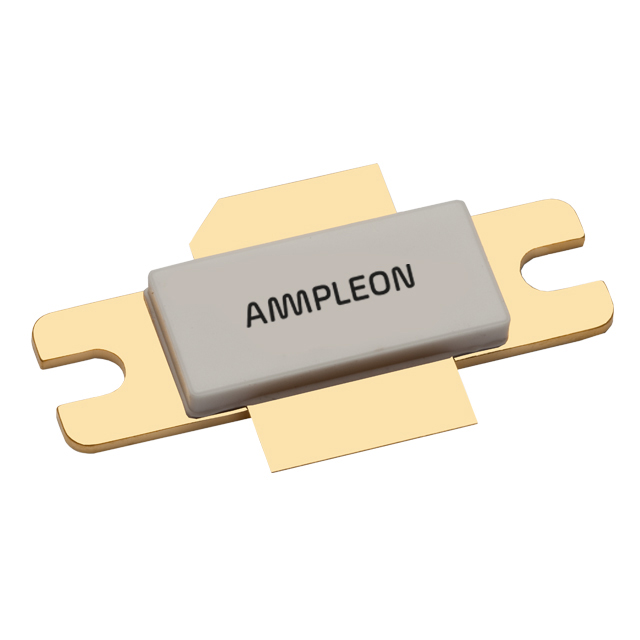
The BLF882U is a 200 W LDMOS RF power transistor designed for broadcast and industrial applications. It delivers rated output power in broadband operations spanning from HF to 860 MHz. The device operates with a drain-source voltage of 50 V and achieves a typical power gain of 20.6 dB at 705 MHz. Key electrical parameters include a drain-source breakdown voltage of 104 V, a gate-source threshold voltage ranging from 1.4 V to 2.4 V, and a thermal resistance from junction to case of 0.56 K/W. The transistor supports class-AB operation with high efficiency and excellent ruggedness against load mismatches.
Verify the specific package variant required for the design, as the BLF882U corresponds to the SOT502A flanged ceramic package with mounting holes. Confirm that the ordering suffix matches the exact physical configuration needed, such as the earless SOT502B variant if applicable. Ensure compliance with RoHS directives and handle the component according to ESD precautions during assembly.
Select this component for designs requiring robust performance in digital transmitter environments where high peak-to-average ratios are present. The device is suitable for both narrowband CW pulsed operations and broadband DVB-T signals. Consider the thermal management requirements given the junction-to-case thermal resistance when designing the heat sink interface for continuous or high-duty cycle operations.
The BLF882U belongs to Ampleon's UHF power LDMOS transistor family, specifically engineered for high-power RF amplification. It shares architectural similarities with the BLF882S, differing primarily in the mechanical package configuration. This series is optimized for applications demanding high linearity and reliability in the ultra-high frequency spectrum.
The BLF882S serves as a direct functional alternative within the same product family, offering identical electrical characteristics but utilizing an earless flanged ceramic package (SOT502B). Verify mechanical fitment and mounting hole alignment when substituting between these variants.
 BLF882U
The activity of extra discounts on wholesale prices is in full swing…
Please fill in your contact information and we will send you the latest wholesale price list.