ChipApex | Global Electronic Components Supplier
SEARCH
Search Product
Search Post
— IC芯片 | 连接器 | 传感器 | 被动器件 —
Search productSearch post
— IC芯片 | 连接器 | 传感器 | 被动器件 —
Consult the customer manager about the wholesale price.
consultation hotline:86-132-6715-2157
email:[email protected]
Contact the product manager for consultation. One-stop consultation is available.
Do you want a lower wholesale price? Please send us your inquiry and we will reply immediately.
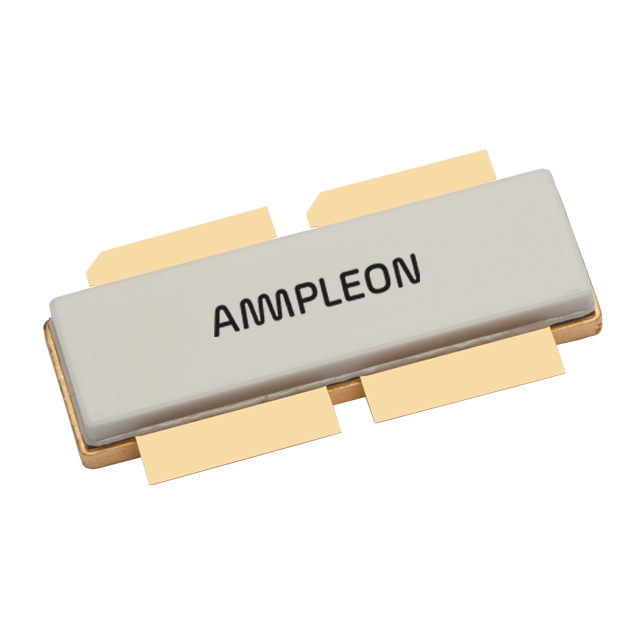
The BLF8G24LS-200PN is a 200 W LDMOS power transistor designed for base station applications in the 2300 MHz to 2400 MHz frequency range. It operates with a drain-source voltage of 28 V and a quiescent current of 1740 mA, delivering an average output power of 60 W. The device provides a typical power gain of 17.2 dB and a drain efficiency of 32% under 1-carrier W-CDMA test conditions. It features a thermal resistance from junction to case of 0.217 K/W at a case temperature of 80 °C. The component utilizes an earless flanged balanced ceramic package (SOT539B) with four leads.
Verify the specific ordering suffix against official Ampleon documentation to ensure correct package version and manufacturing lot specifications. Confirm RoHS compliance status and ESD handling requirements prior to procurement. Ensure that the requested part number matches the exact product data sheet revision to avoid discrepancies in electrical characteristics or pinout definitions during acquisition.
Select this component when designing RF power amplifiers for base stations requiring high efficiency and ruggedness in the 2300 MHz to 2400 MHz range. Consider its low thermal resistance and internal matching for simplified design processes. Evaluate its suitability for Doherty applications due to reduced output capacitance. Verify that the required load mismatch tolerance aligns with the specified VSWR capabilities for the intended operational environment.
This device belongs to the BLF8G24LS series of power LDMOS transistors manufactured by Ampleon. It is specifically engineered for wireless communication infrastructure, providing high linearity and power density. The SOT539B package facilitates efficient heat dissipation through direct mounting to a heatsink, supporting reliable operation in demanding continuous wave and modulated signal environments.
Consult official Ampleon documentation for verified substitute part numbers. Cross-reference electrical parameters such as breakdown voltage, thermal resistance, and impedance values before implementing any alternative components in existing designs.
 BLF8G24LS-200PNU
The activity of extra discounts on wholesale prices is in full swing…
Please fill in your contact information and we will send you the latest wholesale price list.