ChipApex | Global Electronic Components Supplier
SEARCH
Search Product
Search Post
— IC芯片 | 连接器 | 传感器 | 被动器件 —
Search productSearch post
— IC芯片 | 连接器 | 传感器 | 被动器件 —
Consult the customer manager about the wholesale price.
consultation hotline:86-132-6715-2157
email:[email protected]
Contact the product manager for consultation. One-stop consultation is available.
Do you want a lower wholesale price? Please send us your inquiry and we will reply immediately.
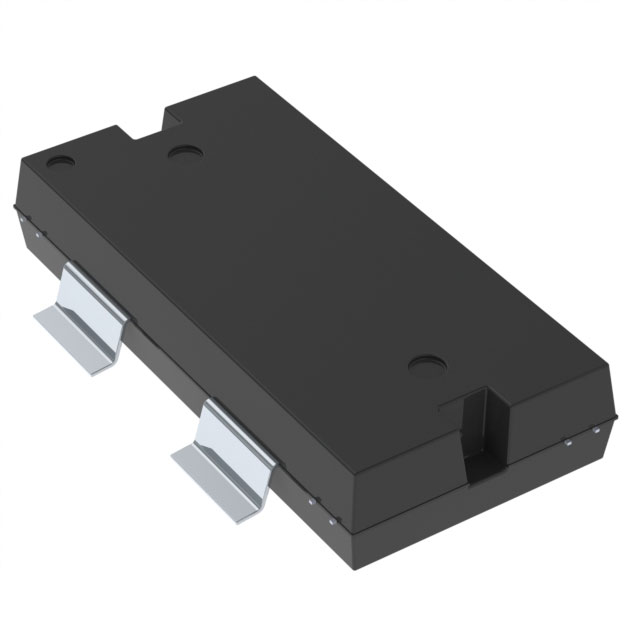
The BLP05H6350XRG is a 350 W extremely rugged LDMOS power transistor designed for broadcast and industrial applications in the HF to 600 MHz band. It utilizes an overmoulded plastic SOT1224-2 package with gull-wing leads, offering high thermal stability and excellent ruggedness against load mismatches exceeding 65:1 VSWR. At 108 MHz under pulsed RF conditions (tp = 100 µs, duty cycle = 20%), it delivers 350 W output power with a typical drain efficiency of 75% and a power gain of 27.5 dB at a drain-source voltage of 50 V. The device features integrated ESD protection and RoHS compliance.
Verify the specific ordering suffix 'GY' against official Ampleon documentation, as the provided datasheet specifies the 'G' variant (SOT1224-2). Confirm that the component matches the required gull-wing lead configuration and ensure compatibility with the intended PCB footprint. Always consult the most recent product data sheet for updated specifications and legal disclaimers before finalizing procurement.
Select this component for designs requiring high power density and robustness in the HF to 600 MHz spectrum. Ensure the application circuit can handle the specified 135 V drain-source breakdown voltage and manage the thermal resistance from junction to case effectively. Verify that the operating conditions remain within the absolute maximum ratings to maintain device reliability and longevity.
This part belongs to the BLP05H6xxxXR series of overmoulded plastic RF power transistors from Ampleon. The series provides a comprehensive portfolio of extremely rugged LDMOS devices sharing the same package outline, facilitating design flexibility and bill-of-materials reduction for manufacturers producing equipment for broadcast and ISM sectors.
The BLP05H6350XR serves as the straight-lead counterpart within the same series. When replacing components, verify that the package type (gull-wing vs. flat leads) aligns with the existing board layout. Cross-referencing with other high-power LDMOS transistors requires careful evaluation of impedance matching networks and thermal management requirements.
 BLP05H6350XRGY
The activity of extra discounts on wholesale prices is in full swing…
Please fill in your contact information and we will send you the latest wholesale price list.