ChipApex | Global Electronic Components Supplier
SEARCH
Search Product
Search Post
— IC芯片 | 连接器 | 传感器 | 被动器件 —
Search productSearch post
— IC芯片 | 连接器 | 传感器 | 被动器件 —
Consult the customer manager about the wholesale price.
consultation hotline:86-132-6715-2157
email:[email protected]
Contact the product manager for consultation. One-stop consultation is available.
Do you want a lower wholesale price? Please send us your inquiry and we will reply immediately.
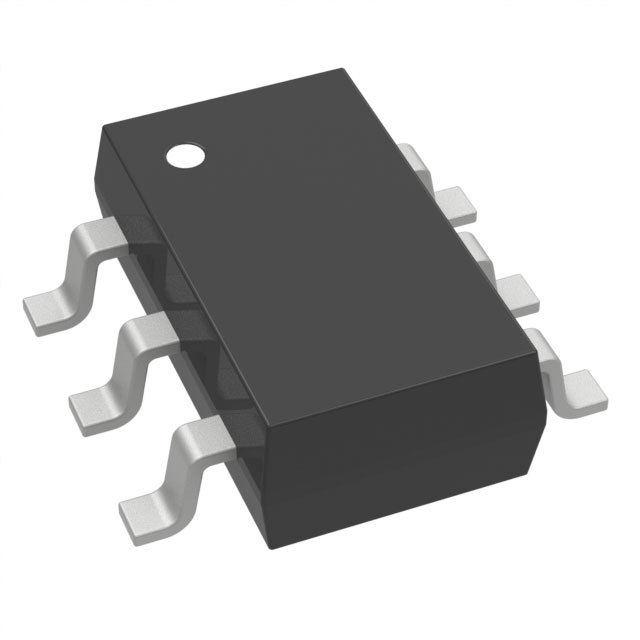
The BSL314PEH6327XTSA1 is an OptiMOS-P 3 dual P-channel small-signal transistor in a PG-TSOP-6 package. It features a drain-source breakdown voltage of -30 V and a continuous drain current of -1.5 A at 25 °C. The device has a maximum on-state resistance of 140 mΩ at VGS=-10 V and 230 mΩ at VGS=-4.5 V. It operates within a temperature range of -55 °C to +150 °C, supports pulsed currents up to -6.1 A, and includes avalanche energy ratings of 6 mJ.
Verify the specific ordering suffix against official Infineon documentation to confirm tape-and-reel quantities and packaging specifications. Ensure component authenticity through authorized distribution channels. Confirm RoHS compliance and halogen-free status requirements match project specifications before finalizing procurement orders.
Select this component when dual independent P-channel switching is required in a compact surface-mount footprint. The logic-level rating enables direct interfacing with standard microcontrollers without additional gate drivers. Consider the thermal resistance characteristics and PCB copper area requirements for adequate heat dissipation during continuous operation.
This part belongs to the BSL314 series of OptiMOS-P 3 transistors designed for low-voltage switching applications. The PG-TSOP-6 package provides a compact solution for space-constrained designs. The H6327 suffix indicates specific manufacturing lot tracking and reel packaging parameters defined by Infineon Technologies.
Direct substitutes include the BSS314PEH6327XTSA1 single-channel variant or other OptiMOS-P 3 devices with matching PG-TSOP-6 footprints. Verify pinout compatibility and electrical parameter margins before implementing any cross-model replacements.
The device supports a single-pulse avalanche energy of 6 mJ when driven at -1.5 A with a 25 Ω gate resistance.
Yes, it includes an integrated body diode with a continuous forward current rating of -0.5 A and a reverse recovery time of 12.5 ns.
The total gate charge is 2.9 nC, and turn-on delay is 5.1 ns, supporting efficient switching in moderate-frequency power management circuits.
 BSL314PEH6327XTSA1
The activity of extra discounts on wholesale prices is in full swing…
Please fill in your contact information and we will send you the latest wholesale price list.