ChipApex | Global Electronic Components Supplier

SEARCH
Search Product
Search Post
— IC芯片 | 连接器 | 传感器 | 被动器件 —
Search productSearch post
— IC芯片 | 连接器 | 传感器 | 被动器件 —
Consult the customer manager about the wholesale price.
consultation hotline:86-132-6715-2157
email:[email protected]
Contact the product manager for consultation. One-stop consultation is available.
Do you want a lower wholesale price? Please send us your inquiry and we will reply immediately.
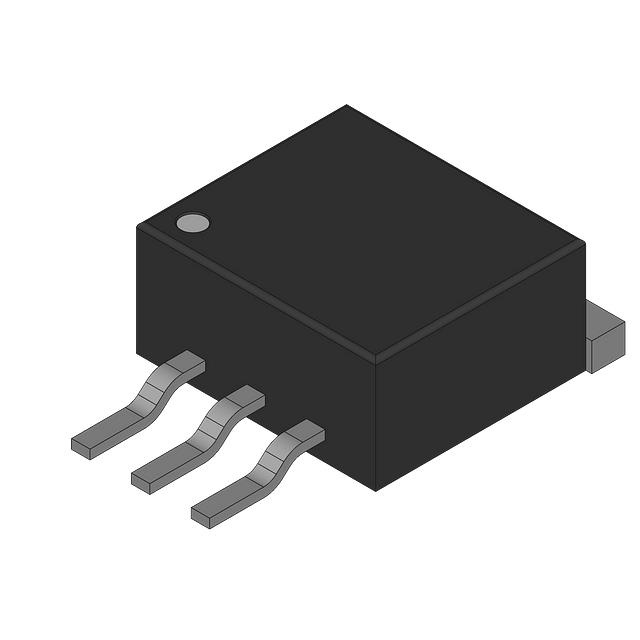
The BUK7606-55A,118 is a standard level N-channel enhancement mode Field-Effect Transistor (FET) manufactured by Nexperia USA Inc. It utilizes TrenchMOS technology to achieve low conduction losses through minimized on-state resistance. The device is designed for robust performance in thermally demanding environments, supporting an operating temperature up to 175 °C. It is qualified to the AEC-Q101 standard, ensuring suitability for critical automotive applications requiring high reliability and durability under stringent operational conditions.
Verify the specific part marking and datasheet revision against the manufacturer's official documentation before integration. Confirm that the AEC-Q101 qualification status aligns with your system's reliability requirements. Ensure thermal management solutions accommodate the 175 °C junction temperature capability. Cross-reference the package outline dimensions with your PCB footprint design to guarantee mechanical compatibility during assembly.
Select this component when low on-state resistance is critical for efficiency in power switching applications. Its AEC-Q101 qualification makes it appropriate for automotive systems where long-term reliability is mandatory. Consider its 175 °C thermal rating for environments with limited cooling options. Verify that the standard level gate drive compatibility matches your controller's output voltage levels to ensure proper switching performance without additional level shifting circuitry.
This device belongs to Nexperia's BUK series of N-channel TrenchMOS FETs. The series is engineered for general-purpose and automotive power switching applications. These transistors leverage advanced trench gate technology to optimize the balance between conduction losses and switching performance. The family is widely used in industrial and automotive sectors for managing loads such as motors, lamps, and solenoids in 12 V and 24 V systems.
Consult the official Nexperia replacement guide or distributor databases for verified cross-references. Ensure any substitute maintains AEC-Q101 compliance if required for automotive use. Verify identical pinout configuration and package dimensions to avoid PCB redesign. Confirm that the alternative device meets or exceeds the original's on-state resistance and thermal specifications.
 BUK7606-55A,118

The activity of extra discounts on wholesale prices is in full swing…
Please fill in your contact information and we will send you the latest wholesale price list.