ChipApex | Global Electronic Components Supplier
SEARCH
Search Product
Search Post
— IC芯片 | 连接器 | 传感器 | 被动器件 —
Search productSearch post
— IC芯片 | 连接器 | 传感器 | 被动器件 —
Consult the customer manager about the wholesale price.
consultation hotline:86-132-6715-2157
email:[email protected]
Contact the product manager for consultation. One-stop consultation is available.
Do you want a lower wholesale price? Please send us your inquiry and we will reply immediately.
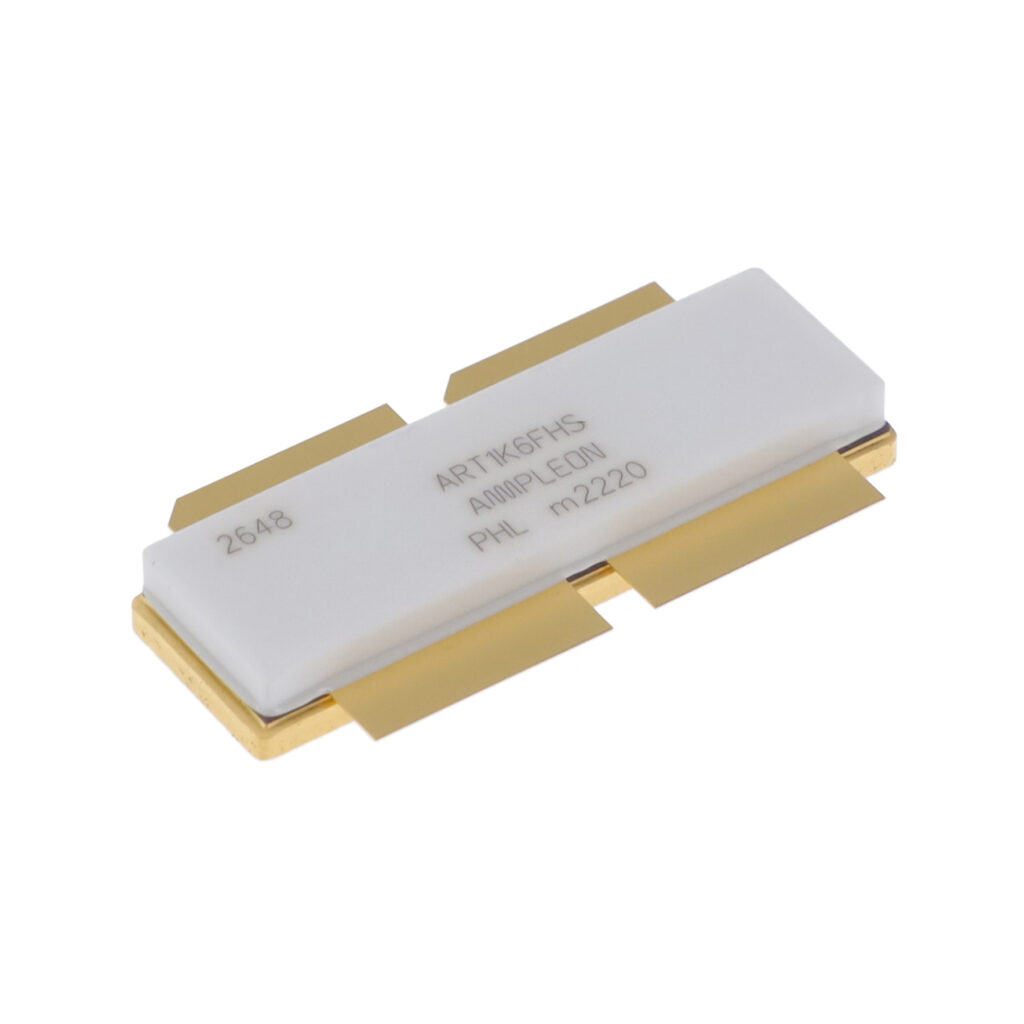
The C4H27W400AVY is a high-power LDMOS transistor manufactured by Ampleon USA Inc., designed for broadband RF applications. It operates within the 27 MHz to 400 MHz frequency range, delivering up to 400 watts of continuous wave output power with a typical gain of 18 dB. The device utilizes a ruggedized silicon LDMOS technology housed in a robust metal-ceramic package optimized for thermal dissipation and mechanical stability. Key electrical characteristics include a drain voltage capability of 50 V and a maximum operating junction temperature of 150 °C, ensuring reliable performance in demanding transmitter environments.
Verify the specific suffix 'AVY' against official Ampleon documentation to confirm exact pinout configuration and RoHS compliance status. Ensure that the ordering information matches the intended thermal interface requirements for your specific heatsink design. Cross-reference the datasheet revision date to validate the electrical parameters before finalizing procurement orders.
Select this component when designing circuits requiring wide bandwidth coverage across HF and VHF bands. Evaluate the thermal resistance specifications to ensure adequate cooling solutions are implemented for sustained 400W operation. Consider the input impedance matching network complexity relative to the device's internal gate structure for optimal stability.
This part belongs to Ampleon's C4H series of high-power LDMOS transistors, which are industry standards for professional broadcasting and industrial RF applications. The series is characterized by its ability to handle high voltages and currents while maintaining linearity over a broad frequency spectrum, making it suitable for replacing older vacuum tube technologies in modern solid-state designs.
Consult official Ampleon substitution guides for direct replacements such as the C4H27W400AV or other variants within the same family. Verify pin-to-pin compatibility and thermal footprint dimensions before swapping with competitor parts like NXP or Infineon equivalents to avoid PCB redesign.
 C4H27W400AVY
The activity of extra discounts on wholesale prices is in full swing…
Please fill in your contact information and we will send you the latest wholesale price list.