 ChipApex | Global Electronic Components Supplier
SEARCH
Search Product
Search Post
— IC芯片 | 连接器 | 传感器 | 被动器件 —
Search productSearch post
— IC芯片 | 连接器 | 传感器 | 被动器件 —
Consult the customer manager about the wholesale price.
consultation hotline:86-132-6715-2157
email:[email protected]
Contact the product manager for consultation. One-stop consultation is available.
Do you want a lower wholesale price? Please send us your inquiry and we will reply immediately.
The CG2H30070F is a GaN-on-SiC HEMT transistor designed for frequency-agile, software-defined radios, C-OFDM data-links, and satellite communications. It delivers greater than 60 W of output power at 50 V bias within the 2.7 to 3.8 GHz band. The device features high reliability, wideband performance, and high power density. Its SiC substrate provides superior thermal management, reducing heat-sink requirements. The technology supports high-frequency operation and high breakdown voltage, making it suitable for applications requiring significant bandwidth and efficiency improvements.
Verify component authenticity by cross-referencing the manufacturer part number with official Wolfspeed or MACOM documentation. Confirm RoHS compliance status and check for specific environmental export classifications such as ECCN codes prior to procurement. Ensure that the ordering suffix matches the required package configuration and verify current availability through authorized distribution channels.
Select this component when designing systems requiring high power density in the 2.7 to 3.8 GHz range. Consider its compatibility with Digital Pre-Distortion techniques for linearity correction. Evaluate thermal management solutions based on the device's high power dissipation characteristics. Ensure the design accommodates the 50 V operating bias point for optimal power output.
This device belongs to the portfolio of GaN HEMT transistors optimized for RF communication products. It is positioned alongside other high-power devices like the CGH27060F and CGHV27060MP. The product line emphasizes reduction of size and weight while improving operational efficiency for demanding wireless infrastructure applications.
Publicly confirmed substitute part numbers are not available in the provided source material. When evaluating alternatives, compare output power capabilities, frequency ranges, and thermal resistance specifications. Verify that any replacement maintains compatibility with existing bias networks and digital pre-distortion algorithms.
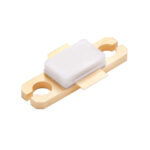 CG2H30070F
The activity of extra discounts on wholesale prices is in full swing…
Please fill in your contact information and we will send you the latest wholesale price list.





