 ChipApex | Global Electronic Components Supplier
SEARCH
Search Product
Search Post
— IC芯片 | 连接器 | 传感器 | 被动器件 —
Search productSearch post
— IC芯片 | 连接器 | 传感器 | 被动器件 —
Consult the customer manager about the wholesale price.
consultation hotline:86-132-6715-2157
email:[email protected]
Contact the product manager for consultation. One-stop consultation is available.
Do you want a lower wholesale price? Please send us your inquiry and we will reply immediately.
The CG2H40120P is a gallium nitride on silicon carbide (GaN-on-SiC) high electron mobility transistor (HEMT) designed for high-power radio frequency applications. It features a 120-volt breakdown voltage and operates within the 0.5 to 6 gigahertz frequency range. The device utilizes a robust SiC substrate to ensure thermal stability and reliability under demanding conditions. Key electrical specifications include a typical output power of 120 watts at 3 volts drain bias, with a corresponding gain of approximately 18 decibels. The component is housed in a surface-mount package optimized for efficient heat dissipation and integration into compact RF amplifier modules.
Verify the specific datasheet revision and manufacturing lot details upon procurement. Ensure that the supplier provides traceability documentation consistent with MACOM Technology Solutions standards. Confirm that the component matches the exact part number designation to avoid compatibility issues with existing circuit designs.
Select this component when high linearity and power density are required in the VHF and UHF bands. Evaluate thermal resistance parameters against the intended heatsink design to maintain junction temperatures within safe operating limits. Consider the drive power requirements relative to the specified gain characteristics for system efficiency optimization.
This device belongs to MACOM's CG2H series of GaN HEMTs, which are engineered for ruggedness and high power performance. The series targets applications requiring reliable operation in harsh electromagnetic environments. The CG2H40120P specifically addresses needs for broadband amplification where size and weight constraints are critical factors in system architecture.
No official direct substitutes are listed by the manufacturer. Engineers should evaluate alternative GaN devices from other vendors based on matching pin configurations, thermal footprints, and electrical performance curves. Cross-compatibility requires rigorous simulation and testing to ensure signal integrity and thermal compliance.
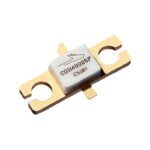 CG2H40120P
The activity of extra discounts on wholesale prices is in full swing…
Please fill in your contact information and we will send you the latest wholesale price list.





