ChipApex | Global Electronic Components Supplier
SEARCH
Search Product
Search Post
— IC芯片 | 连接器 | 传感器 | 被动器件 —
Search productSearch post
— IC芯片 | 连接器 | 传感器 | 被动器件 —
Consult the customer manager about the wholesale price.
consultation hotline:86-132-6715-2157
email:[email protected]
Contact the product manager for consultation. One-stop consultation is available.
Do you want a lower wholesale price? Please send us your inquiry and we will reply immediately.
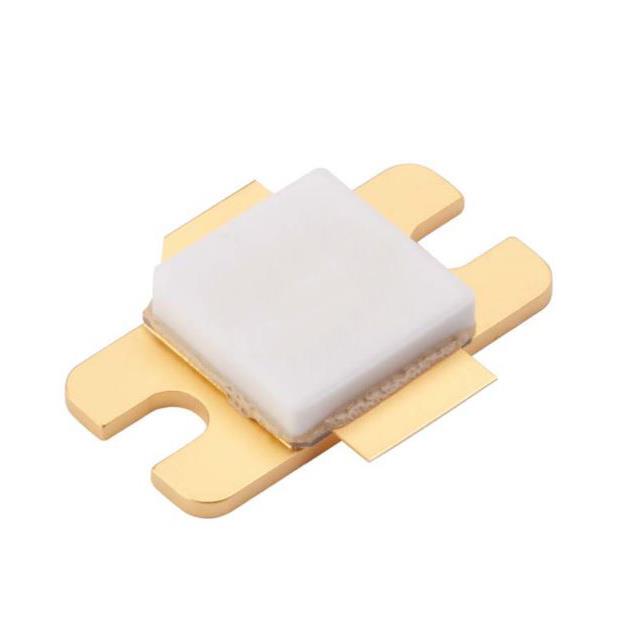
The CGHV35120F is a gallium nitride (GaN) high electron mobility transistor (HEMT) designed for S-band radar amplifier applications. It operates within the 2.9 to 3.8 GHz frequency range and delivers a rated output power of 120 W at a case temperature of 85°C. The device features a ceramic/metal flange package, supporting transient pulses from 100 μsec to 300 μsec at a 20% duty cycle. Typical drain efficiency reaches 62% at 85°C, with a power gain of approximately 13 dB.
Verify the specific application circuit requirements against the datasheet's typical performance conditions. Confirm that the operating case temperature does not exceed the maximum ratings provided. Ensure proper torque specifications are applied during installation to maintain thermal interface integrity. Check for updated documentation on MACOM's official support channels before finalizing procurement.
Select this component when designing amplifiers requiring high output power density in the S-band spectrum. Consider the thermal management capabilities required to sustain the 120 W rating at elevated case temperatures. Evaluate the need for large signal models if utilizing ADS or MWO for circuit design. Ensure the system can accommodate the specified transient pulse widths and duty cycles.
This device belongs to MACOM's portfolio of GaN HEMTs optimized for high-power RF applications. It utilizes advanced semiconductor technology to achieve superior performance metrics compared to traditional silicon-based transistors. The flange package design facilitates efficient heat dissipation, making it suitable for high-reliability radar systems.
Consult MACOM technical support for verified substitute part numbers. Do not assume cross-compatibility with other GaN devices without reviewing electrical characteristics and pin configurations.
The absolute maximum drain-source voltage (VDSS) rating is 150 V at 25°C.
Yes, the device has an ESD classification of HBM Class 1A and CDM Class 0CB.
The typical drain efficiency at 3.1 GHz is 68% under specified pulsed conditions.
 CGHV35120F
The activity of extra discounts on wholesale prices is in full swing…
Please fill in your contact information and we will send you the latest wholesale price list.