ChipApex | Global Electronic Components Supplier
SEARCH
Search Product
Search Post
— IC芯片 | 连接器 | 传感器 | 被动器件 —
Search productSearch post
— IC芯片 | 连接器 | 传感器 | 被动器件 —
Consult the customer manager about the wholesale price.
consultation hotline:86-132-6715-2157
email:[email protected]
Contact the product manager for consultation. One-stop consultation is available.
Do you want a lower wholesale price? Please send us your inquiry and we will reply immediately.
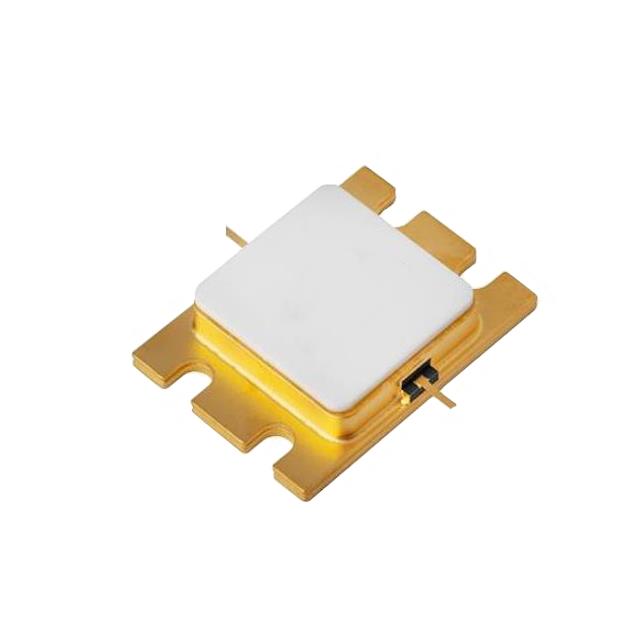
The CGHV50200F is a gallium nitride (GaN) amplifier operating from 4.4 to 5.0 GHz, delivering 180 W saturated power with 11.5 dB large signal gain and 48% drain efficiency at 40 V. It features internal 50 Ω matching for simplified integration. The device supports CW, pulse, and linear modes, utilizing a ceramic/metal flange package (type 440217). Designed for high-temperature operation, it meets RoHS standards and ensures ruggedness against output mismatches up to 3:1.
Verify the specific revision status and datasheet version before procurement, as MACOM reserves the right to modify product information without notice. Confirm that the required evaluation test fixture or tuning solution aligns with your design requirements, as performance data is measured in specific fixtures. Ensure proper ESD handling procedures are followed during assembly due to static sensitivity.
Select this component for C-Band applications requiring high power density and efficiency. The internal 50 Ω matching reduces external circuit complexity. Verify thermal management capabilities, as junction temperature calculations depend on case temperature and power dissipation. Ensure biasing sequences strictly follow the recommended ON/OFF protocols to prevent device damage.
This part belongs to MACOM's GaN HEMT amplifier family designed for robust RF performance. It utilizes a ceramic/metal flange package (440217) suitable for high-power thermal management. The device is engineered for reliability in demanding communication environments, offering high ruggedness against mismatched loads.
No public confirmed substitute part numbers are available in the provided documentation.
The maximum junction temperature is +225°C. Operating at nominal conditions with TJ ≤ +225°C ensures an MTTF greater than 1 x 10^6 hours.
The flange on the package bottom must be connected to RF, DC, and thermal ground.
Ensure RF is off, apply a -5 V pinch-off voltage to the gate, apply nominal drain voltage, bias the gate to the desired quiescent current, and then apply RF.
 CGHV50200F
The activity of extra discounts on wholesale prices is in full swing…
Please fill in your contact information and we will send you the latest wholesale price list.