ChipApex | Global Electronic Components Supplier
SEARCH
Search Product
Search Post
— IC芯片 | 连接器 | 传感器 | 被动器件 —
Search productSearch post
— IC芯片 | 连接器 | 传感器 | 被动器件 —
Consult the customer manager about the wholesale price.
consultation hotline:86-132-6715-2157
email:[email protected]
Contact the product manager for consultation. One-stop consultation is available.
Do you want a lower wholesale price? Please send us your inquiry and we will reply immediately.
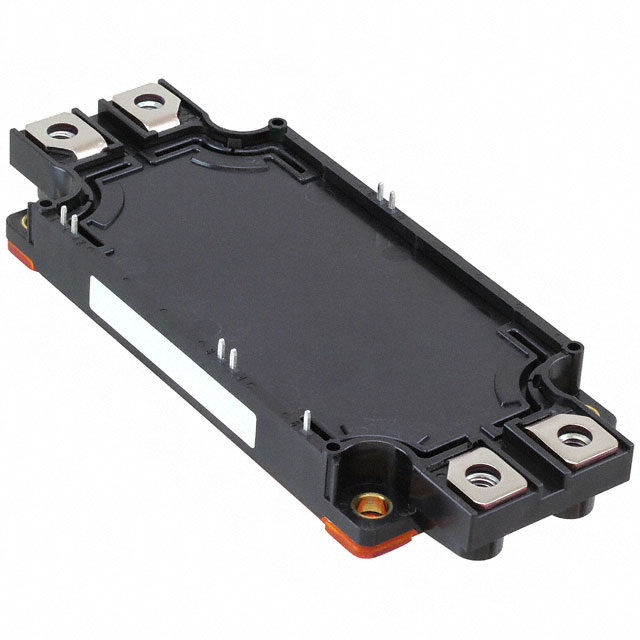
The CM450DX-24S1 is a dual IGBT module manufactured by Mitsubishi Electric, belonging to the T-Series NX Type D. It features a silicon technology construction with screw mount installation. The module supports a maximum collector-emitter voltage of 1.2 kV and delivers a continuous collector current of 450 A at 25°C. Key electrical parameters include a collector-emitter saturation voltage of 1.65 V, a gate-emitter leakage current of 500 nA, and a power dissipation rating of 2.5 kW. The operational temperature range spans from -40°C to +150°C, with a maximum gate-emitter voltage of 20 V.
Verify the manufacturer designation carefully, as official documentation lists Mitsubishi Electric as the producer for this specific part number. Confirm RoHS compliance details through the provided datasheet before integration. Ensure that the screw mount configuration matches the mechanical design of the target assembly. Cross-reference the specific suffix codes to guarantee exact parameter alignment with system requirements.
Select this component when a 1.2 kV rating and 450 A continuous current capacity are required for dual configurations. Evaluate the 1.65 V saturation voltage against efficiency targets for the specific load profile. Ensure the cooling solution can handle the 2.5 kW power dissipation at the maximum junction temperature of 150°C. Verify that the drive circuitry accommodates the 20 V maximum gate-emitter voltage limit.
This module is part of the broader T-Series lineup designed for demanding power conversion tasks. It shares the NX Type D structural characteristics with other variants in the series, offering standardized mounting and pinout compatibility. The dual configuration allows for half-bridge or full-bridge topologies in medium to high-power industrial equipment.
Direct substitutes may include other Mitsubishi Electric T-Series modules with matching voltage and current ratings, such as the CM450DX-34T#330G, though thermal and electrical parameters must be verified. Alternative manufacturers require careful evaluation of package dimensions and thermal resistance characteristics to ensure mechanical and electrical interchangeability.
 CM450DX-24S1
The activity of extra discounts on wholesale prices is in full swing…
Please fill in your contact information and we will send you the latest wholesale price list.