 ChipApex | Global Electronic Components Supplier
SEARCH
Search Product
Search Post
— IC芯片 | 连接器 | 传感器 | 被动器件 —
Search productSearch post
— IC芯片 | 连接器 | 传感器 | 被动器件 —
Consult the customer manager about the wholesale price.
consultation hotline:86-132-6715-2157
email:[email protected]
Contact the product manager for consultation. One-stop consultation is available.
Do you want a lower wholesale price? Please send us your inquiry and we will reply immediately.
The CPH3314-TL-E is a small signal PNP bipolar junction transistor manufactured by Sanyo. It utilizes an epitaxial planar silicon construction and is housed in an SC-59 (TO-236) surface-mount package with three terminals. The device is designed for high-speed switching applications, featuring a maximum collector current of 2 A and a collector-emitter voltage rating of 50 V. It offers a minimum DC current gain of 200 and supports high allowable power dissipation within an ultrasmall form factor that facilitates miniaturization in end products.
Verify the manufacturer origin as Sanyo Semicon Device when sourcing this component. Confirm the specific suffix TL-E matches the required packaging and compliance specifications. Ensure the part number corresponds to the PNP configuration rather than the NPN variant found in similar series codes. Cross-reference the absolute maximum ratings against your system's operational limits before integration.
Select this component for designs requiring compact surface-mount solutions with robust switching characteristics. The SC-59 package is ideal for space-constrained PCB layouts. Consider the 50 V collector-emitter voltage limit when designing for higher voltage environments. The high current capacity allows it to drive moderate loads directly without additional buffering stages in many standard configurations.
This transistor belongs to the CPH3xxx series from Sanyo, which includes both PNP and NPN variants. The CPH3145 and CPH3245 are frequently documented together in datasheets, sharing identical physical dimensions and general electrical profiles. This family emphasizes miniaturization through ultrasmall packages while maintaining high power dissipation capabilities for versatile electronic applications.
Direct substitutes within the same series include the CPH3245, which serves as the complementary NPN counterpart. Other devices in the CPH3xxx lineup may offer similar pinouts and electrical characteristics. Verify polarity requirements carefully when swapping between PNP and NPN types in existing circuit designs.
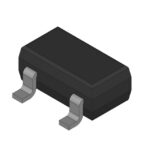 CPH3314-TL-E
The activity of extra discounts on wholesale prices is in full swing…
Please fill in your contact information and we will send you the latest wholesale price list.





