ChipApex | Global Electronic Components Supplier
SEARCH
Search Product
Search Post
— IC芯片 | 连接器 | 传感器 | 被动器件 —
Search productSearch post
— IC芯片 | 连接器 | 传感器 | 被动器件 —
Consult the customer manager about the wholesale price.
consultation hotline:86-132-6715-2157
email:[email protected]
Contact the product manager for consultation. One-stop consultation is available.
Do you want a lower wholesale price? Please send us your inquiry and we will reply immediately.
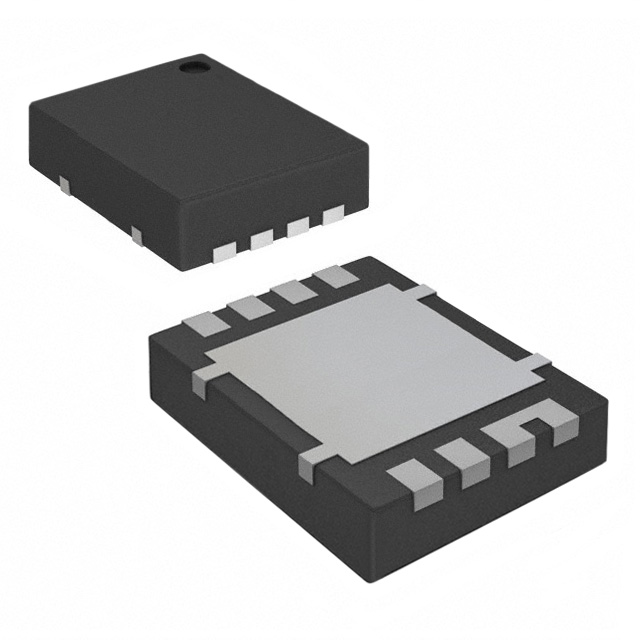
The CSD86350Q5DT is a synchronous MOSFET half-bridge power block from Texas Instruments, integrating two asymmetric NexFET power MOSFETs within an advanced packaging structure. Designed for low-voltage synchronous buck applications, this component delivers high performance and efficiency in a footprint significantly smaller than discrete solutions. The device is capable of generating up to 40 A of current and supports high switching frequencies, enabling designers to achieve higher power density. It offers improved efficiency metrics compared to competitor discrete MOSFET devices when operating in standard synchronous buck circuits.
Verify the specific ordering suffix Q5DT against the manufacturer's official datasheet to confirm pinout compatibility and thermal specifications. Ensure that the selected variant matches the required package dimensions and lead configuration for the target PCB layout. Cross-reference the part number with the latest TI documentation to validate any recent manufacturing updates or revisions.
Select this component for applications requiring reduced board space without compromising current handling capabilities. Evaluate the thermal performance requirements against the integrated package's dissipation characteristics. Consider the switching frequency limits to ensure compatibility with the external controller and passive components used in the synchronous buck topology.
This power block belongs to Texas Instruments' NexFET Power Block family, which focuses on consolidating discrete power stages into unified modules. The integration aims to simplify design complexity while improving overall system efficiency. This specific model represents an advancement in packaging technology designed to outperform traditional discrete MOSFET arrangements in size and electrical performance.
Direct replacements are limited due to the proprietary integrated packaging. Designers may consider other TI NexFET Power Block variants with similar current ratings but must verify pin-to-pin compatibility and thermal interface requirements before substitution.
 CSD86350Q5DT
The activity of extra discounts on wholesale prices is in full swing…
Please fill in your contact information and we will send you the latest wholesale price list.