ChipApex | Global Electronic Components Supplier
SEARCH
Search Product
Search Post
— IC芯片 | 连接器 | 传感器 | 被动器件 —
Search productSearch post
— IC芯片 | 连接器 | 传感器 | 被动器件 —
Consult the customer manager about the wholesale price.
consultation hotline:86-132-6715-2157
email:[email protected]
Contact the product manager for consultation. One-stop consultation is available.
Do you want a lower wholesale price? Please send us your inquiry and we will reply immediately.
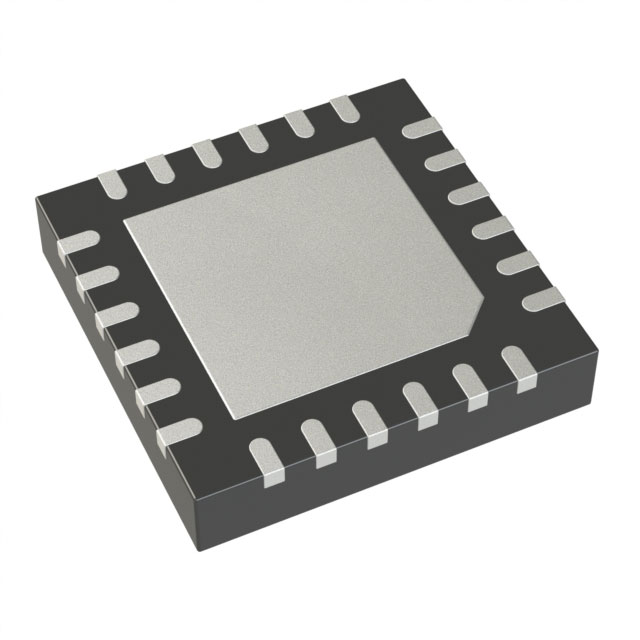
The DC35GN-15-Q4 is a GaN-on-SiC wideband transistor designed for broadband pulsed and continuous wave (CW) RF power applications. It operates with a 50V bias and delivers up to 15W of saturated output power across the DC to 3.5 GHz frequency range. The device utilizes a QFN 4x4 mm package featuring gold metallization and an air-cavity copper base, providing high thermal conductivity and superior electrical performance. Key specifications include a drain-source breakdown voltage of 125V, a maximum operating junction temperature of +200°C, and a typical power gain of 18 dB at 1.4 GHz.
Verify the specific revision status of the datasheet before finalizing designs, as Microsemi reserves the right to change configurations without notice. Confirm that the application environment does not involve life-support or mission-critical equipment, as the product has been subject to limited testing in these areas. Ensure proper thermal interface materials are selected to utilize the exposed pad effectively.
Select this component when designing RF front-ends requiring a balance of moderate power output and wide bandwidth. The 50V bias requirement dictates the power supply architecture. Consider the QFN package's thermal resistance characteristics and ensure the PCB layout includes solid copper-filled vias under the exposed pad to maintain optimal heat dissipation and RF performance.
This device belongs to the family of GaN-on-SiC wideband transistors manufactured by Microsemi. It is specifically engineered to replace traditional LDMOS or GaAs devices in S-band and C-band applications where higher efficiency and smaller form factors are required. The QFN packaging allows for surface-mount integration into compact microwave circuits.
No direct public substitute part numbers are documented in the provided datasheet. Designers should consult Microsemi's official resources for comparable parts or perform a full schematic and layout redesign if transitioning from other manufacturers' devices due to differing pinouts and bias requirements.
 DC35GN-15-Q4
The activity of extra discounts on wholesale prices is in full swing…
Please fill in your contact information and we will send you the latest wholesale price list.