 ChipApex | Global Electronic Components Supplier

SEARCH
Search Product
Search Post
— IC芯片 | 连接器 | 传感器 | 被动器件 —
Search productSearch post
— IC芯片 | 连接器 | 传感器 | 被动器件 —
Consult the customer manager about the wholesale price.
consultation hotline:86-132-6715-2157
email:[email protected]
Contact the product manager for consultation. One-stop consultation is available.
Do you want a lower wholesale price? Please send us your inquiry and we will reply immediately.
The DMN33D8LDWQ-7 is a dual N-channel enhancement mode MOSFET designed for automotive applications. It features a maximum drain-source voltage (BVDSS) of 30V and a gate-source voltage (VGSS) rating of ±20V. The device offers low on-resistance, with RDS(ON) values of 3Ω at VGS=4.5V/ID=250mA, 5Ω at VGS=4.0V/ID=200mA, and 7Ω at VGS=2.5V/ID=100mA. Continuous drain current reaches 250mA at TA=+25°C. Total power dissipation is 0.35W at +25°C ambient temperature. The component operates within a junction temperature range of -55°C to +150°C and utilizes an SOT363 package.
Verify the specific ordering suffix against official Diodes Incorporated documentation to confirm packaging quantity and reel specifications. Ensure compliance with RoHS 3 and REACH directives as stated in the datasheet. Confirm PPAP capability requirements if the application demands automotive production part approval process adherence before finalizing procurement.
Select this component when a dual N-channel MOSFET solution is required for space-constrained designs using the SOT363 package. Evaluate the RDS(ON) performance at the specific gate drive voltage intended for the application, as resistance varies significantly between 2.5V and 4.5V thresholds. Consider the thermal resistance of 360°C/W for heat dissipation planning in steady-state conditions.
This device belongs to the DMN33 series of dual N-channel enhancement mode MOSFETs manufactured by Diodes Incorporated. The series is engineered to meet stringent automotive reliability standards. The DMN33D8LDWQ-7 variant specifically utilizes a tape and reel packaging format containing 3,000 units per reel, distinguishing it from other variants in the family that may offer different quantities or configurations.
Consult the official Diodes Incorporated catalog for direct replacements within the DMN33 series. Verify pinout compatibility and electrical parameters such as BVDSS and RDS(ON) when evaluating alternative dual N-channel MOSFETs from other manufacturers. Ensure any substitute meets the same AEC-Q101 qualification level if used in automotive contexts.
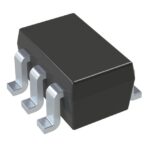 DMN33D8LDWQ-7

The activity of extra discounts on wholesale prices is in full swing…
Please fill in your contact information and we will send you the latest wholesale price list.





