ChipApex | Global Electronic Components Supplier

SEARCH
Search Product
Search Post
— IC芯片 | 连接器 | 传感器 | 被动器件 —
Search productSearch post
— IC芯片 | 连接器 | 传感器 | 被动器件 —
Consult the customer manager about the wholesale price.
consultation hotline:86-132-6715-2157
email:[email protected]
Contact the product manager for consultation. One-stop consultation is available.
Do you want a lower wholesale price? Please send us your inquiry and we will reply immediately.
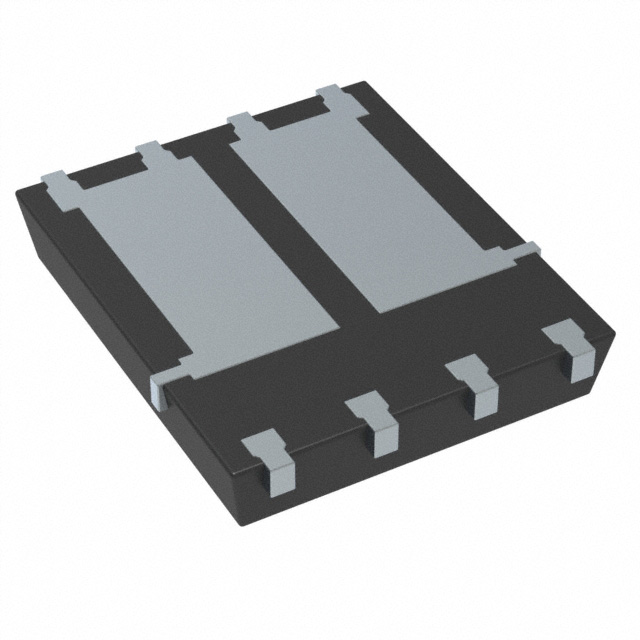
The DMTH69M9LPDWQ-13 is a single N-channel enhancement mode MOSFET manufactured by Diodes Incorporated. It utilizes silicon technology and is housed in a PowerDI5060-8 surface-mount package. The device features a drain-source breakdown voltage (Vds) of 60 V and supports a continuous drain current (Id) of 49 A. Its maximum on-resistance (Rds(on)) is 16.8 mΩ, with a gate threshold voltage (Vgs(th)) of 2 V. The total gate charge (Qg) is 32 nC at 10 V. Electrical ratings include a maximum gate-source voltage (Vgs) of ±16 V and power dissipation (Pd) of 51.7 W. Operating temperatures range from -55°C to +175°C junction temperature.
Verify the complete part number including the suffix against official manufacturer documentation before ordering. Confirm that the specific revision matches project requirements. Check RoHS compliance status through the datasheet. Ensure the supplier provides valid traceability documents. Validate packaging specifications such as reel quantity directly with the distributor or manufacturer representative.
Select this component when a 60 V N-channel MOSFET with low Rds(on) is required in a compact surface-mount form factor. Evaluate thermal management needs based on the 51.7 W power dissipation rating. Compare gate charge characteristics against driver capabilities to ensure adequate switching speed. Verify that the 49 A current rating exceeds the application's peak load requirements under specified thermal conditions.
This part belongs to the DMTH series of MOSFETs from Diodes Incorporated, designed for high-efficiency power switching. The PowerDI5060-8 package offers improved thermal conductivity compared to traditional packages. The DMTH69M9LPDWQ-13 variant specifically targets applications requiring moderate voltage blocking with high current handling in a small footprint.
No official substitute part numbers are documented for this specific model. When considering alternatives, verify matching Vds, Id, Rds(on), and package dimensions. Ensure thermal resistance characteristics are compatible with existing board layouts. Cross-compatibility cannot be assumed without detailed electrical comparison.
 DMTH69M9LPDWQ-13

The activity of extra discounts on wholesale prices is in full swing…
Please fill in your contact information and we will send you the latest wholesale price list.