ChipApex | Global Electronic Components Supplier
SEARCH
Search Product
Search Post
— IC芯片 | 连接器 | 传感器 | 被动器件 —
Search productSearch post
— IC芯片 | 连接器 | 传感器 | 被动器件 —
Consult the customer manager about the wholesale price.
consultation hotline:86-132-6715-2157
email:[email protected]
Contact the product manager for consultation. One-stop consultation is available.
Do you want a lower wholesale price? Please send us your inquiry and we will reply immediately.
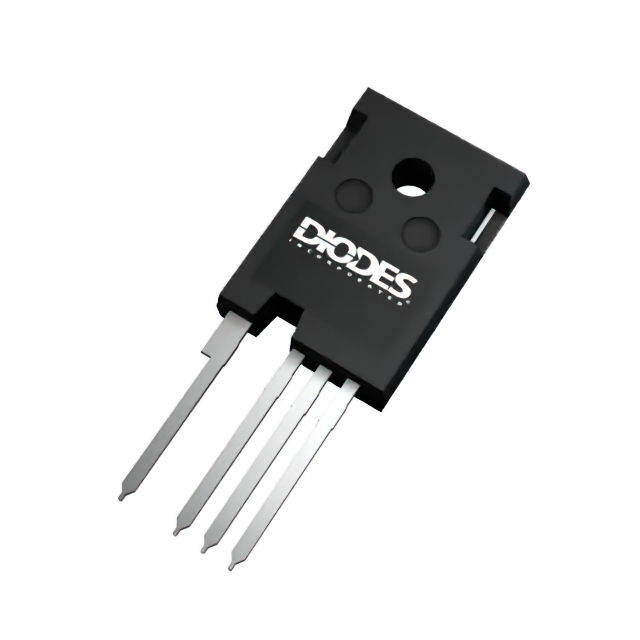
The DMWSH120H28SM3 is a 1200V N-channel Silicon Carbide (SiC) power MOSFET manufactured by Diodes Incorporated. It features a maximum drain-source voltage of 1200V and a typical static drain-source on-resistance of 20mΩ at VGS=15V, with a maximum rating of 28.5mΩ. The device supports a continuous drain current of 97.4A at TC=+25°C and 68.8A at TC=+100°C. Total gate charge is typically 175nC. It utilizes a TO-247 package with a junction-to-case thermal resistance of 0.37°C/W and operates within a temperature range of -55°C to +175°C.
Verify the specific part number against official manufacturer documentation to ensure correct specifications. Confirm RoHS compliance status and packaging details directly with authorized distributors or the manufacturer. Ensure the component meets all relevant automotive and industrial standards required for your specific design implementation before finalizing procurement.
Select this component for designs requiring high-voltage handling and low conduction losses in silicon carbide applications. Consider the thermal management requirements based on the specified junction-to-case resistance and power dissipation limits. Evaluate the switching energy characteristics against system efficiency targets and gate drive capabilities to optimize performance.
This SiC MOSFET belongs to Diodes Incorporated's portfolio of wide-bandgap semiconductor devices. It is engineered to replace traditional silicon-based solutions in high-frequency and high-temperature environments. The device offers improved energy efficiency and reduced system size compared to conventional MOSFETs operating at similar voltage levels.
An automotive-compliant version of this component is available under the separate datasheet designation DMWSH120H28SM3Q. Verify if automotive qualification standards are required for the target application when considering this alternative.
The maximum continuous drain current is 68.8A when the case temperature is maintained at +100°C.
The on-resistance increases as the junction temperature rises, as illustrated in the typical on-resistance versus junction temperature graphs provided in the datasheet.
 DMWSH120H28SM3
The activity of extra discounts on wholesale prices is in full swing…
Please fill in your contact information and we will send you the latest wholesale price list.