ChipApex | Global Electronic Components Supplier
SEARCH
Search Product
Search Post
— IC芯片 | 连接器 | 传感器 | 被动器件 —
Search productSearch post
— IC芯片 | 连接器 | 传感器 | 被动器件 —
Consult the customer manager about the wholesale price.
consultation hotline:86-132-6715-2157
email:[email protected]
Contact the product manager for consultation. One-stop consultation is available.
Do you want a lower wholesale price? Please send us your inquiry and we will reply immediately.
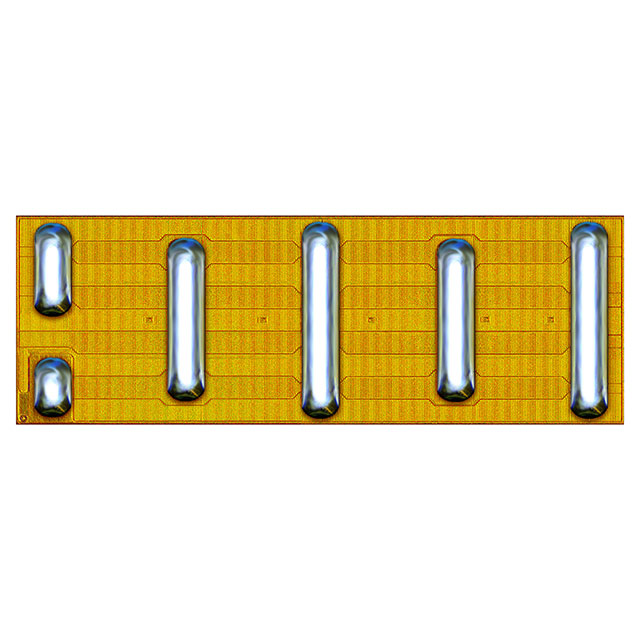
The EPC2215 is an enhancement mode gallium nitride (eGaN) field-effect transistor manufactured by Efficient Power Conversion. It features a 200 V drain-source voltage rating and a typical on-resistance of 8 milliohms at a gate drive of 5 V. The device supports a continuous drain current of 32 A at ambient temperature and 162 A in pulsed operation. Packaged as a bumped die in an LGA footprint measuring 4.6 x 1.6 mm, it is designed for high-frequency switching applications requiring low conduction and switching losses.
Verify the specific ordering suffix to confirm the exact package configuration and tape-and-reel specifications required for your assembly process. Ensure that the gate drive voltage aligns with the 5 V threshold for optimal performance. Confirm thermal management requirements based on the bumped die form factor and expected operating currents to maintain junction temperatures within safe limits during high-power operation.
Select this component when designing circuits requiring 200 V blocking capability with minimal conduction losses. The eGaN technology offers superior switching speed compared to silicon MOSFETs, making it suitable for high-frequency topologies. Consider the small footprint for space-constrained designs. Evaluate the gate drive requirements carefully, as the enhancement mode device requires positive voltage to turn on and negative or zero voltage to turn off reliably.
The EPC2215 belongs to the EPC eGaN FET family, which utilizes gallium nitride on silicon technology. This family focuses on replacing traditional silicon MOSFETs and IGBTs in power electronics to achieve higher efficiency and power density. The EPC2215 specifically targets mid-voltage applications where fast switching and low on-state resistance are critical for system performance.
Direct pin-to-pin replacements may not exist due to the unique bumped die packaging. Designers often substitute silicon MOSFETs with similar voltage and current ratings but must account for differences in gate drive requirements and parasitic capacitances. Verify compatibility with existing PCB footprints and thermal solutions before transitioning from legacy components.
 EPC2215
The activity of extra discounts on wholesale prices is in full swing…
Please fill in your contact information and we will send you the latest wholesale price list.